What Causes It Around Here
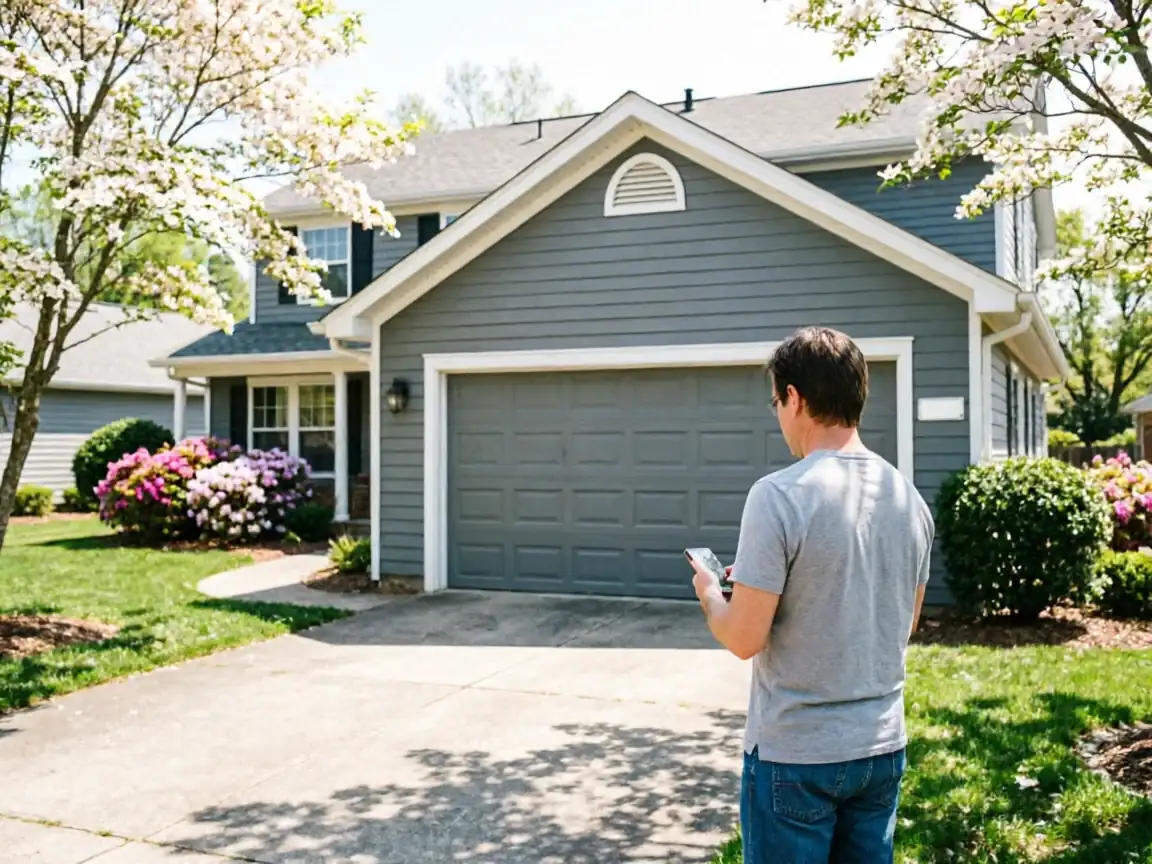
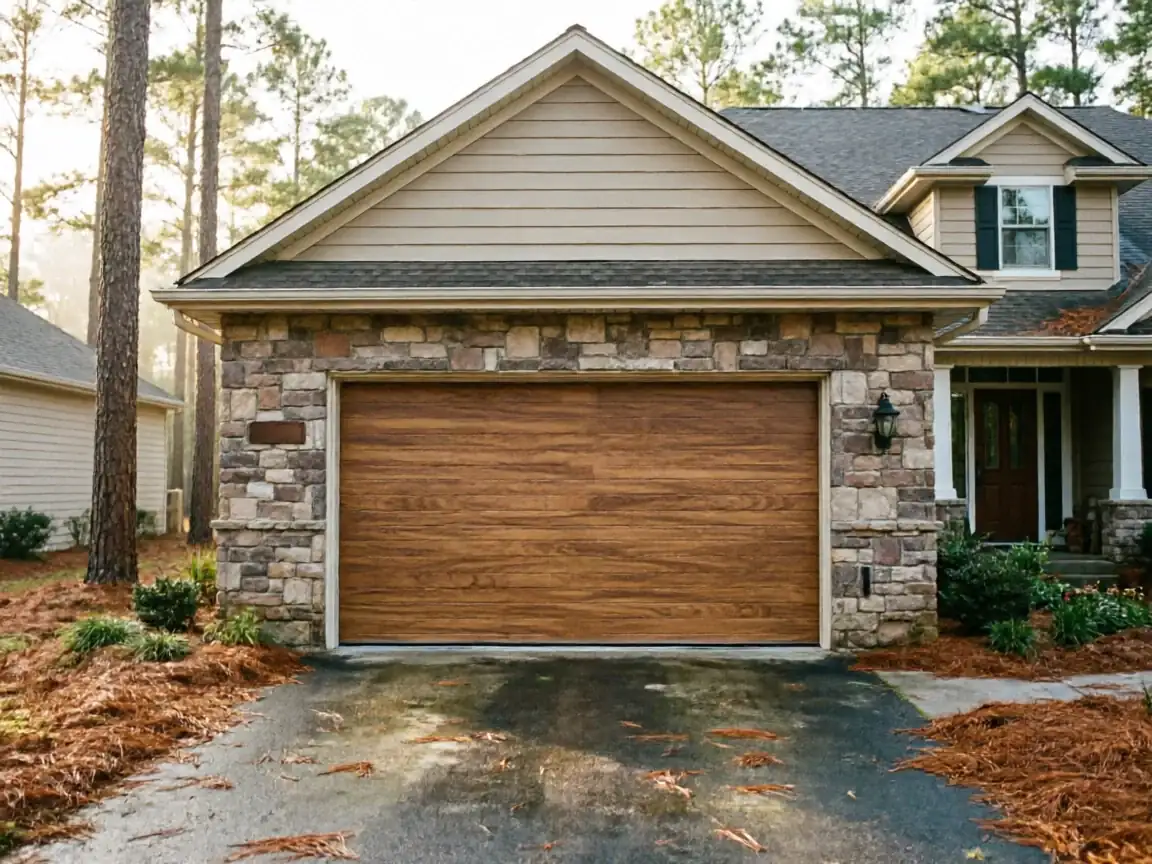
Medina's housing stock skews younger than most of the territory we cover out of Jackson. Across the wider service area, homes run from 1960 up through 2004, with a median around 1975 - plenty of older single-layer steel and even wood sectional doors still in service. Medina itself centers closer to that 2004 end of the range. That matters for panel damage because newer doors are almost always steel sectional with factory-baked finish and foam-backed insulation, not the thin single-skin panels you'll find on a 1965 build elsewhere in the area.
On a door this age, panel failure usually comes from an impact - a trailer hitch backed in wrong, a basketball hoop mount that clipped the top section, a kid's bike against the bottom panel - rather than from the door simply wearing out. The climate here is cold-moderate, so winter freeze-thaw can work a small dent into a crack over a season or two if it's left alone, especially on the bottom panel where road salt and moisture sit longest. We don't see widespread panel failure from age alone on homes this new; when we get a call, it's almost always one panel, one cause, not a door that's quit all at once.
Parts We Carry
Because Medina's doors tend to be newer builds, panel matching is usually about finding the same profile and insulation value rather than hunting down a discontinued style. We carry common steel sectional panel sizes and will match the embossing pattern (flush, long raised, short raised) and the R-value style as closely as the existing door allows.
Here's the honest part: if your door is a less common brand or a limited-run color, we may not have that exact panel on the truck, and ordering it can take time we don't control. We'll tell you straight whether we can source a matching section or whether your money is better spent replacing the whole door so every panel matches again. Patching one panel on an otherwise good door is usually the right call when the door is this age - it's rarely the right call on a door that's already near the end of its life.
How Long It Takes
We run this job out of Jackson, about 12 miles from Medina
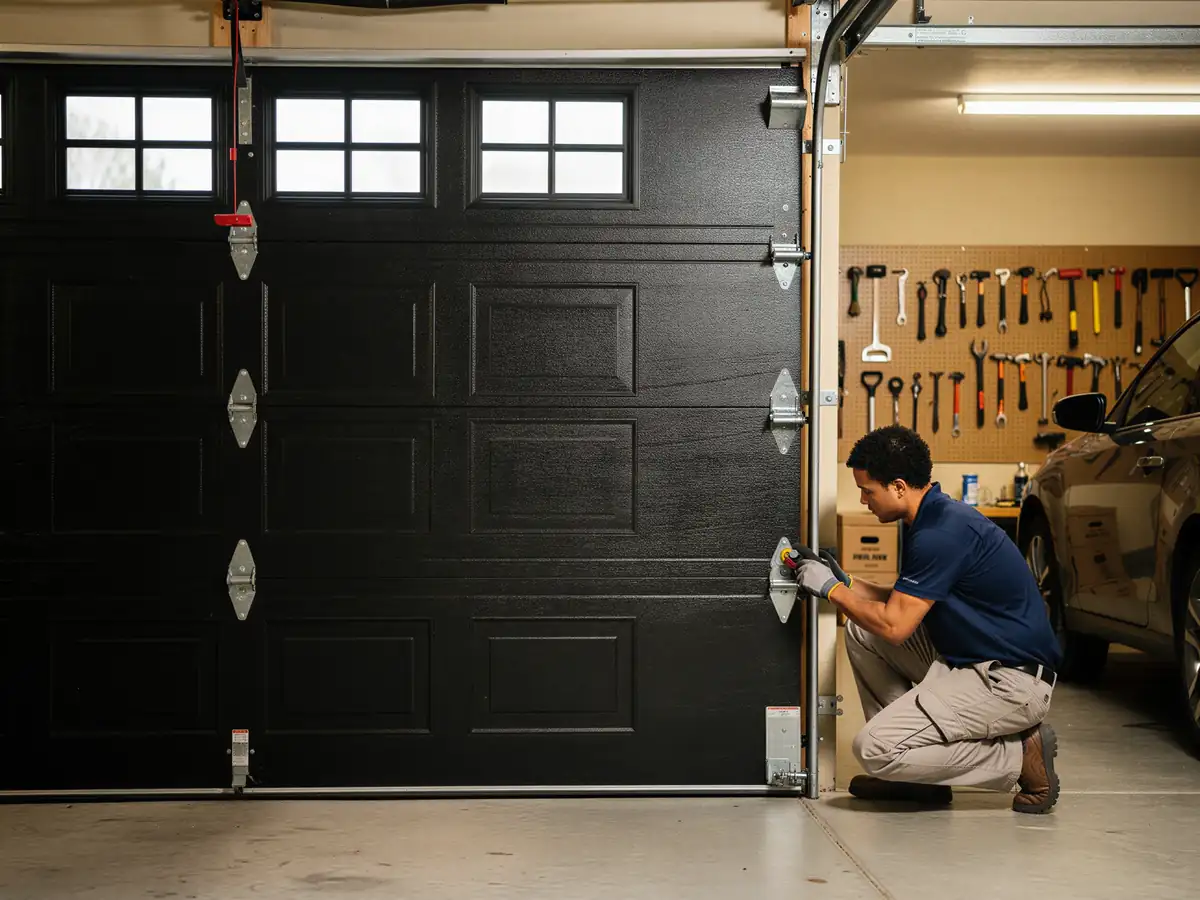
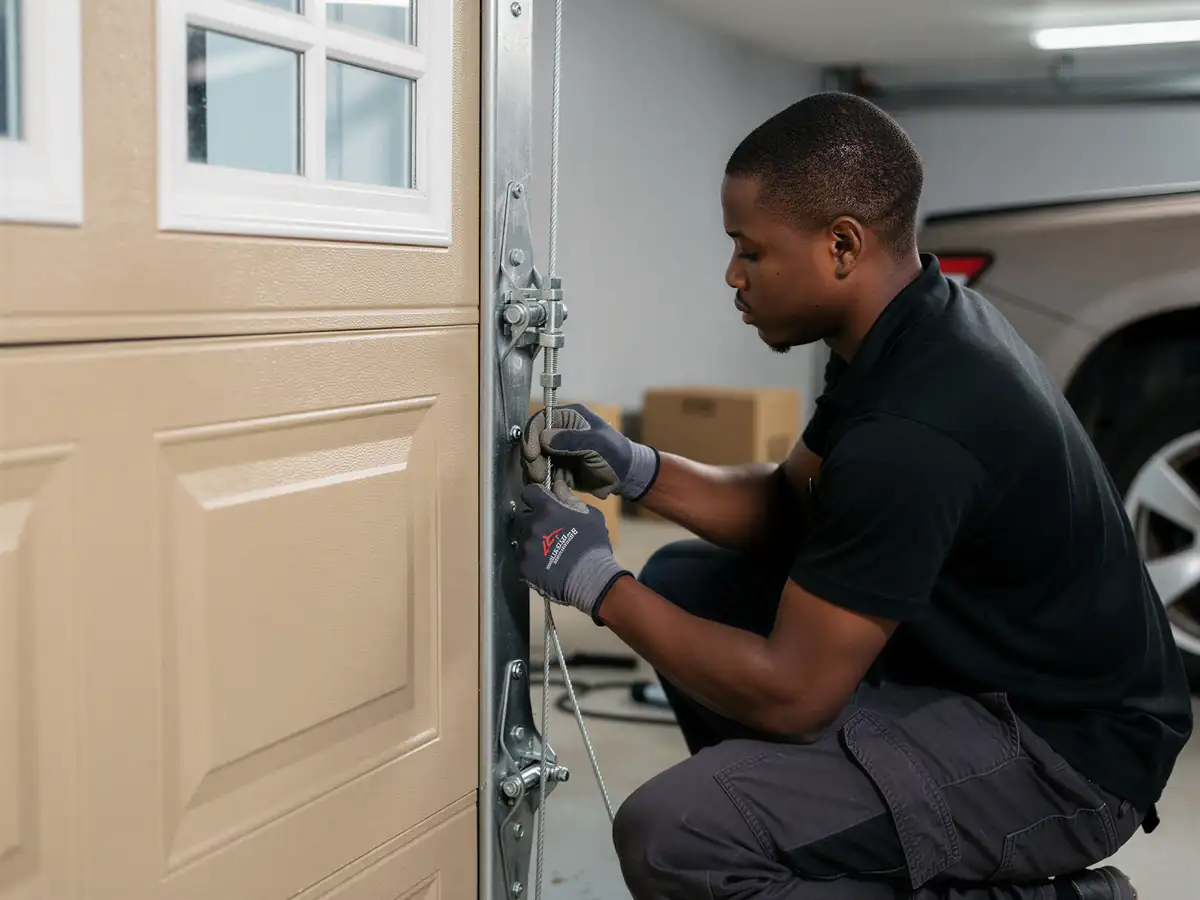
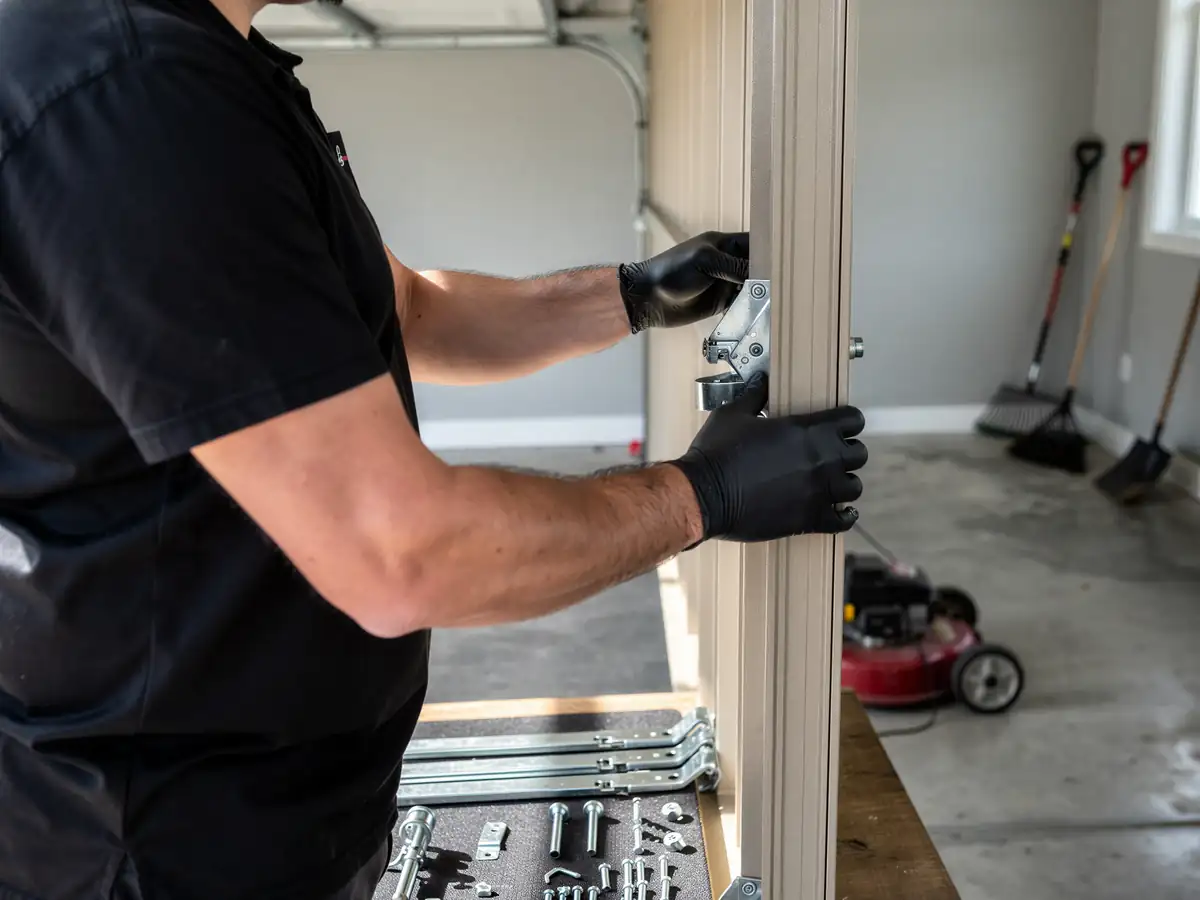
So the drive adds a little to scheduling but not much to the work itself. Swapping a single panel on a sectional door, once we're on site with the right part, is typically a same-visit job - remove the damaged section, transfer hardware, set and balance the door.
- 12 miles
What slows things down isn't the drive, it's parts availability
If we're carrying a matching panel already, you're looking at one visit. If we have to order a section to match your specific door, that's a second trip once it arrives. We'll tell you which situation you're in before we leave your driveway the first time, not after.
The Symptom
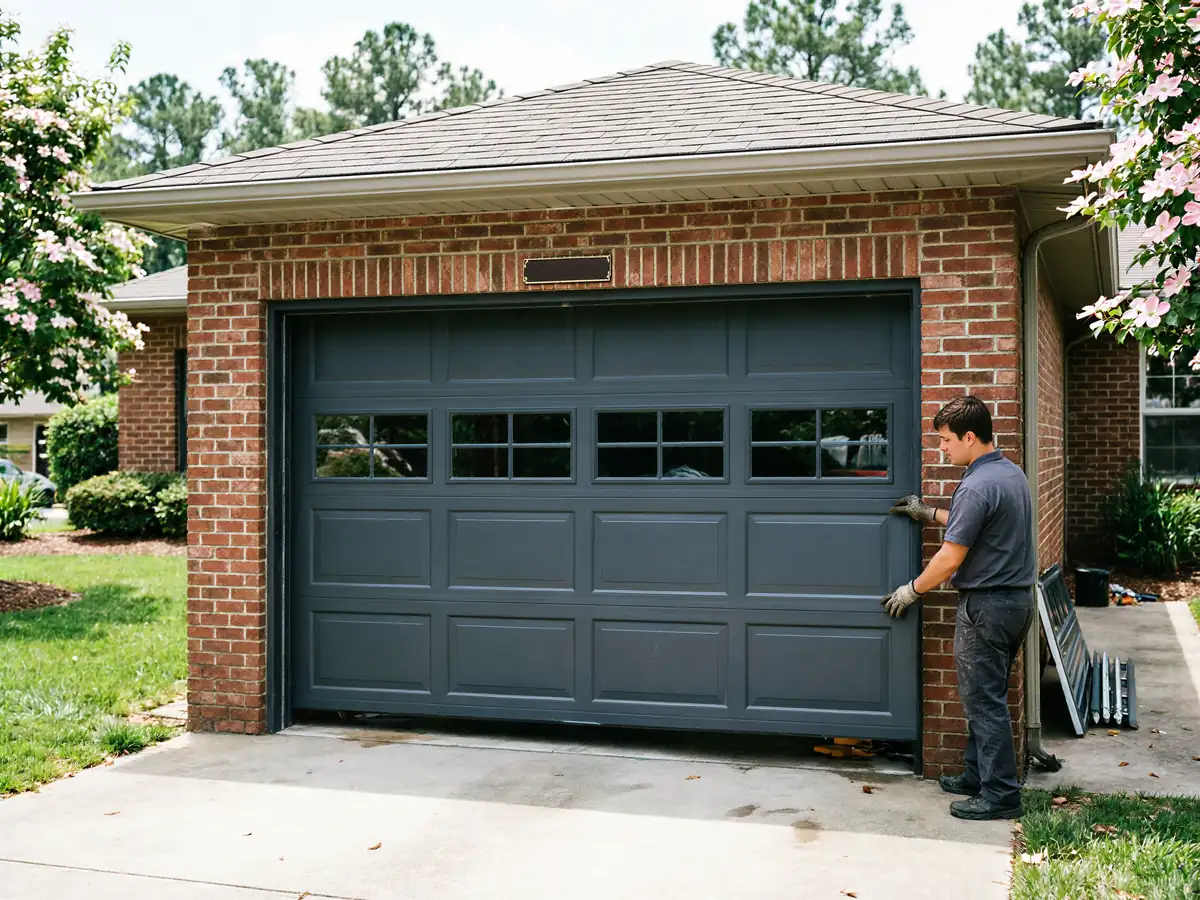
A damaged panel on a newer sectional door usually shows up as one of three things: a visible dent that's started to crease or crack the steel skin, a section that's bowed enough to catch on the track as the door travels, or a corner that's separated from the hinge mount after an impact. On insulated steel panels like most of what's in Medina, a hard dent can also crack the foam backing, which you'll sometimes notice as a cold draft along that section in winter even before the metal shows obvious damage.
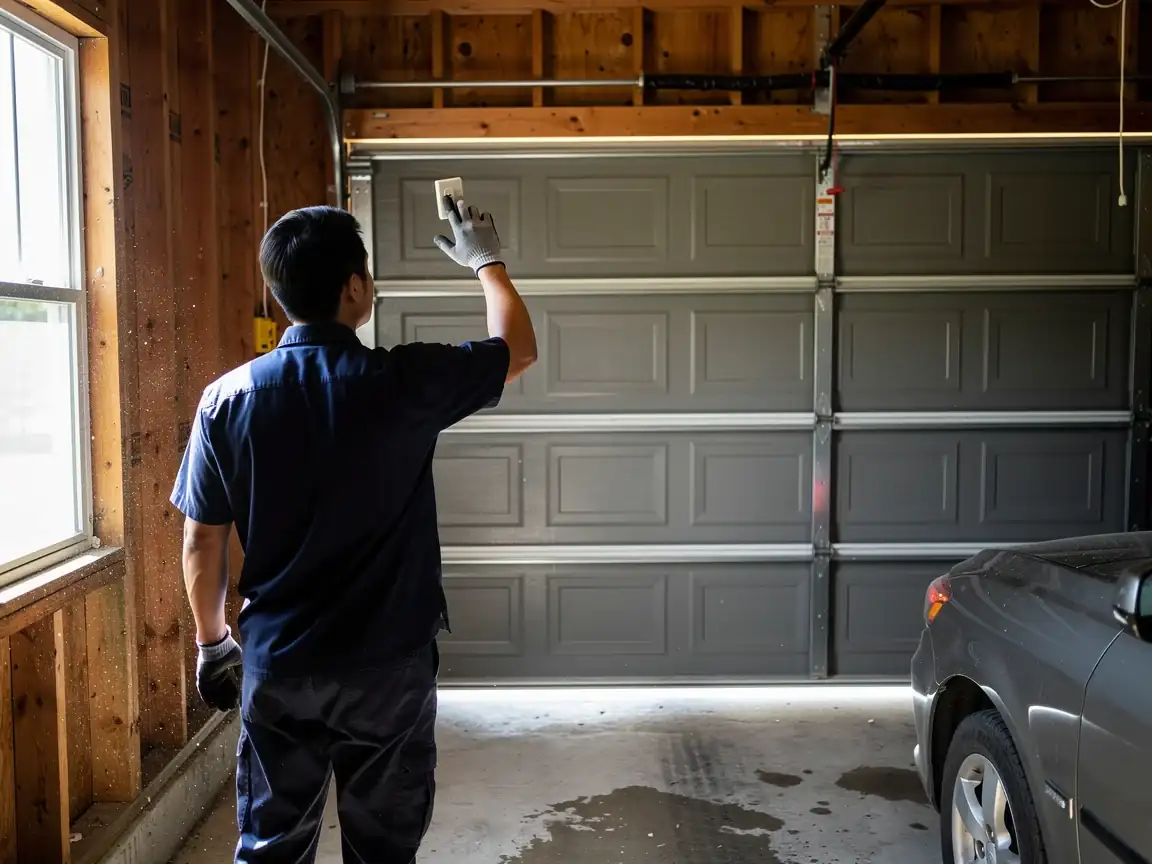
If the door still opens and closes but drags, scrapes, or binds near the damaged section, don't keep running it through the cycle - a bent panel can walk the rollers out of the track and turn a one-panel fix into a track and roller job too.
Can You Do This Yourself
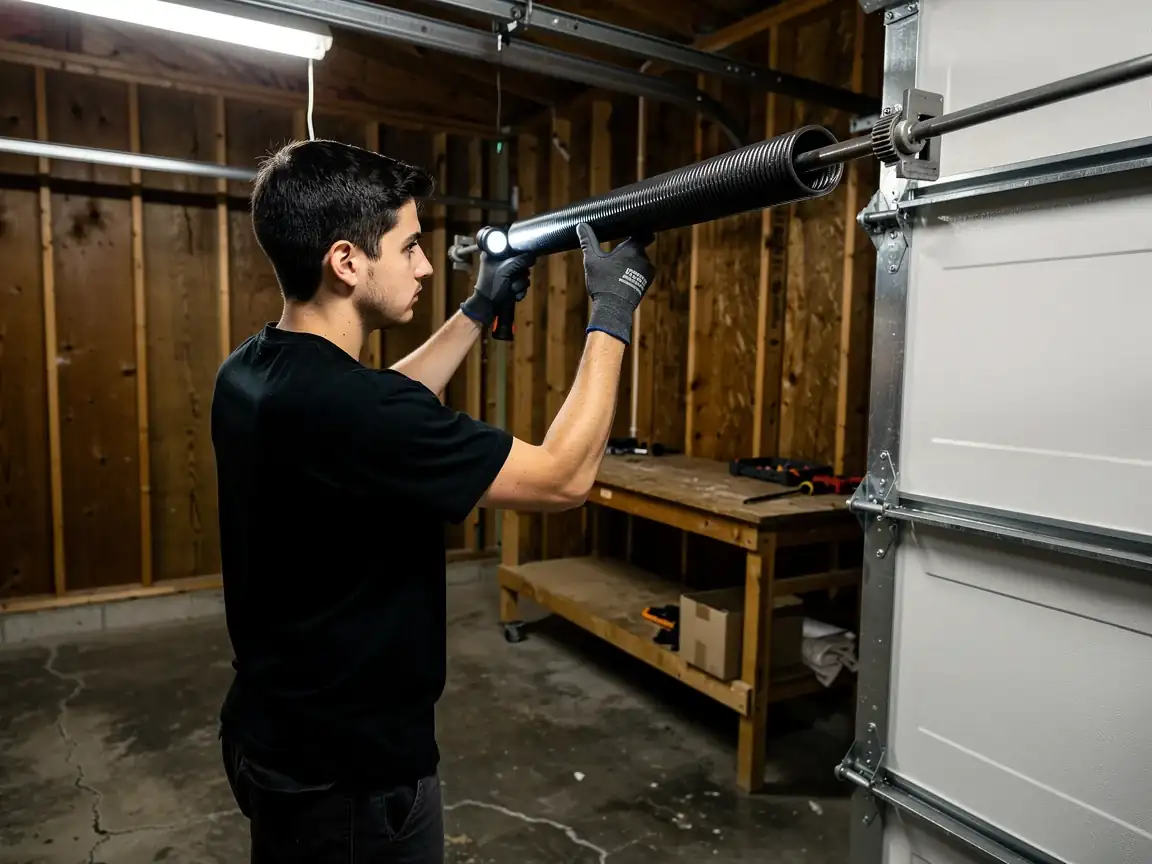
Removing and replacing a single panel on a sectional door is within reach for someone comfortable with a socket set and a little patience, provided the door is otherwise balanced and the springs are in good shape. The tricky part isn't the panel itself - it's getting the replacement section aligned with the existing hinges and rollers so the door doesn't bind on the track afterward.
Where we'd tell you to stop and call: if the panel damage is near a spring anchor bracket, if the door is off its track, or if you're not sure your current panel style is even still made. Guessing wrong on panel matching means living with a visibly mismatched door until the right part shows up - or paying twice.