When It Stops Being a DIY Job
A squeak you can fix with a can of lubricant. A grinding, popping, or metal-on-metal bang is a different animal, and in this part of it usually shows up on doors that are older than you think. Most of the housing stock across the nine areas we cover went up between 1960 and 2004, with the median build year sitting around 1975. That means a lot of original hardware is still in service: torsion springs rated for a lifecycle that ran out years ago, rollers that were never swapped to nylon, cables fraying where nobody can see them until they let go.
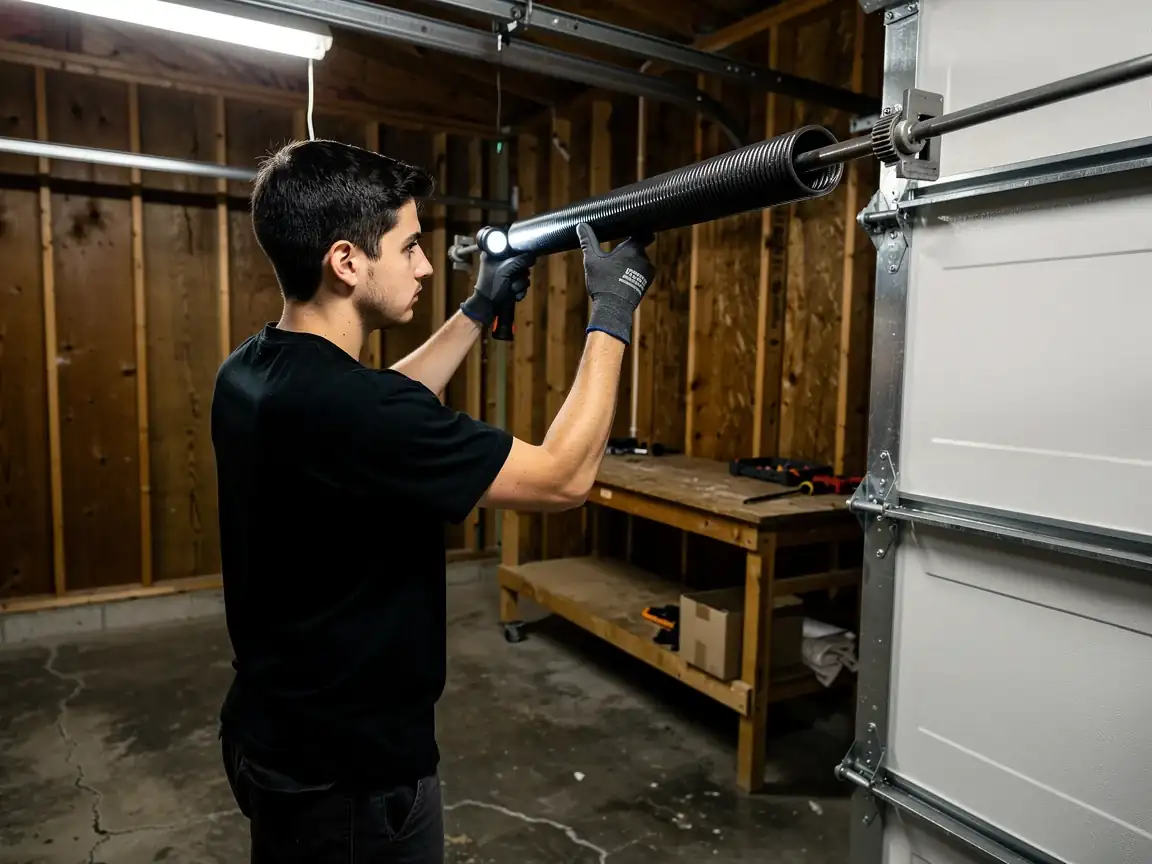
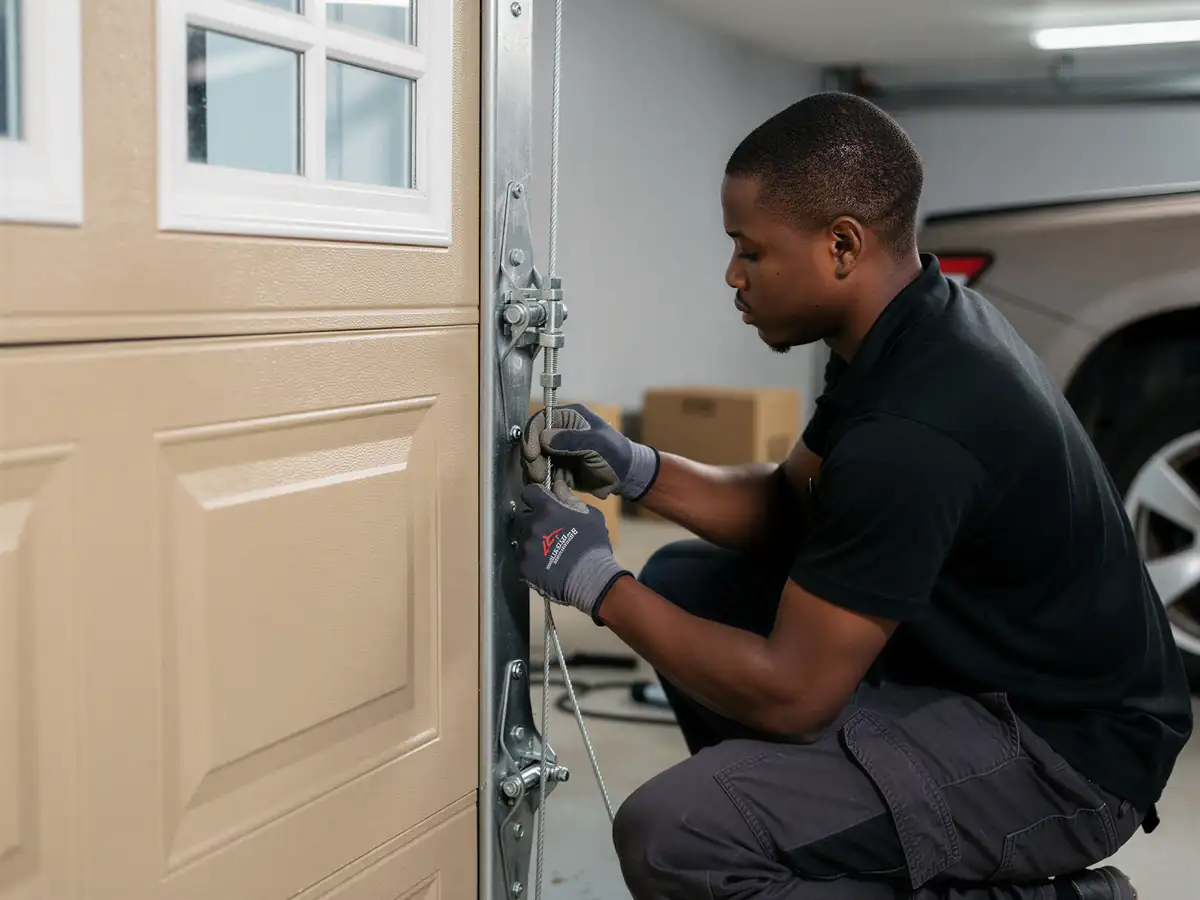
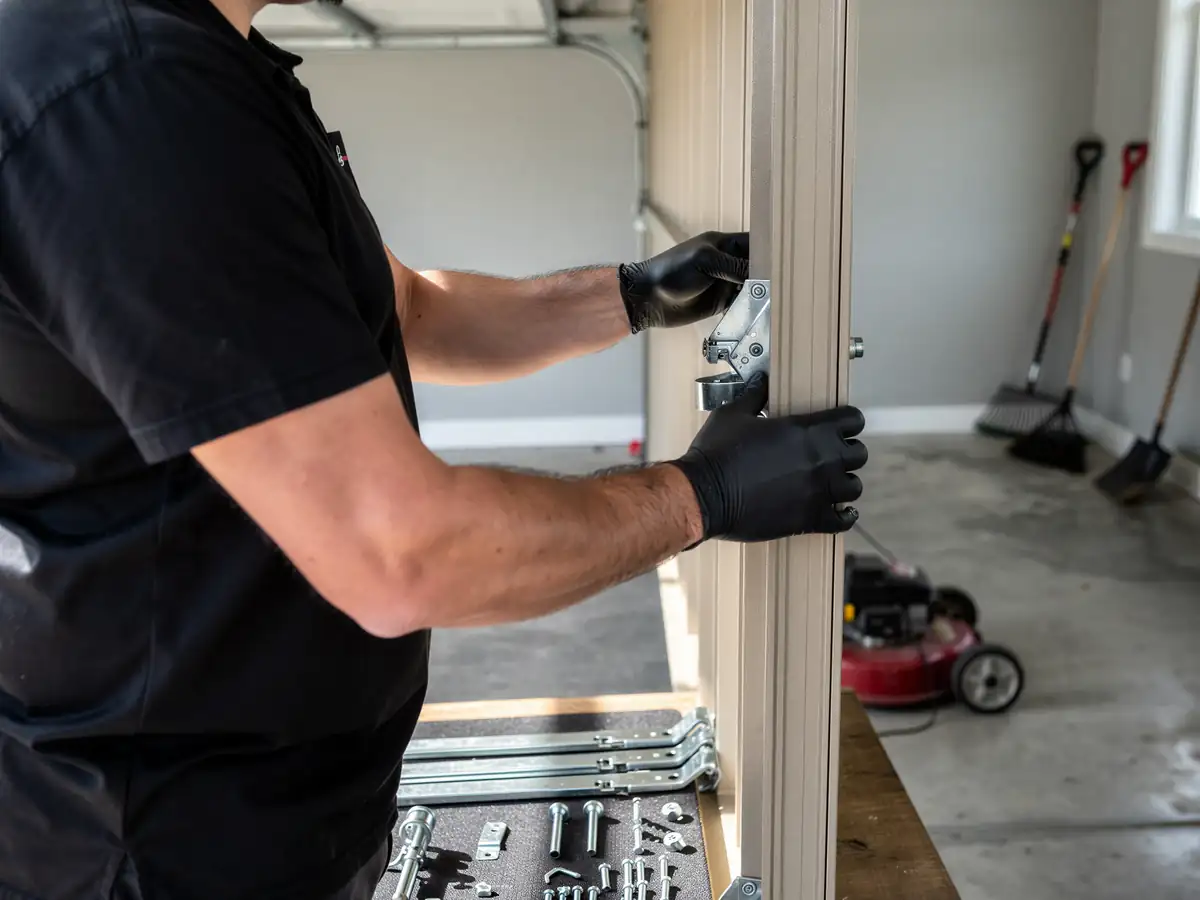
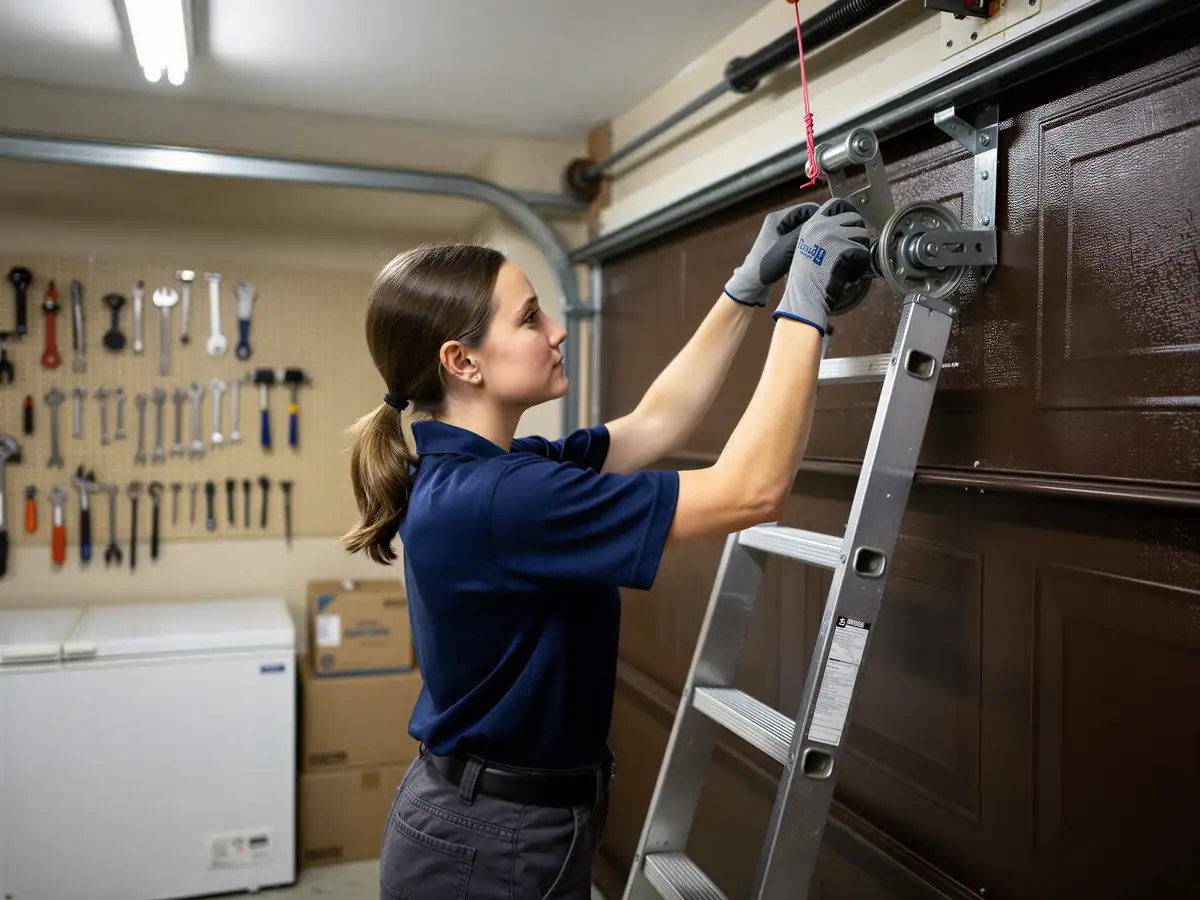
If the noise happens every time the door moves and it's getting louder week over week, that's wear, not a one-time fluke. Tightening a bracket or dropping in oil won't undo thirty-plus years of cycles on a spring. Once a spring is audibly straining - a grinding pop right before the door lifts, or a loud bang when it's sitting shut - you're past the point where a homeowner with a ladder should be the one opening the garage. A broken torsion spring under tension can put someone in the hospital. That's the line: lubricate and tighten yourself, but hand off anything involving the spring or cable system.
How Local Conditions Play In
Jackson sits in a cold-moderate climate band - not the deep freeze of the upper Midwest, but enough temperature swing through the year to work metal and rubber harder than a mild climate would. Steel contracts in winter, which tightens tolerances on tracks and hinges that were already loose from age. A door that rolled quietly in August can start groaning in January for no reason other than the metal shrank a few thousandths of an inch.
This matters more here because of how old the average door system already is. A newer door with fresh hardware shrugs off seasonal contraction. A door built when a 1975-era house was new has bushings and rollers that were marginal to begin with, and the cold just exposes it. If your noise is seasonal - quiet in summer, loud in winter - that's a strong sign the track alignment or roller wear is the real problem, not just a lack of grease.
What Is Going On
A few sounds and what they usually mean, going by the kind of hardware common on doors from the 1960s-70s era that makes up most of the stock across our service area:
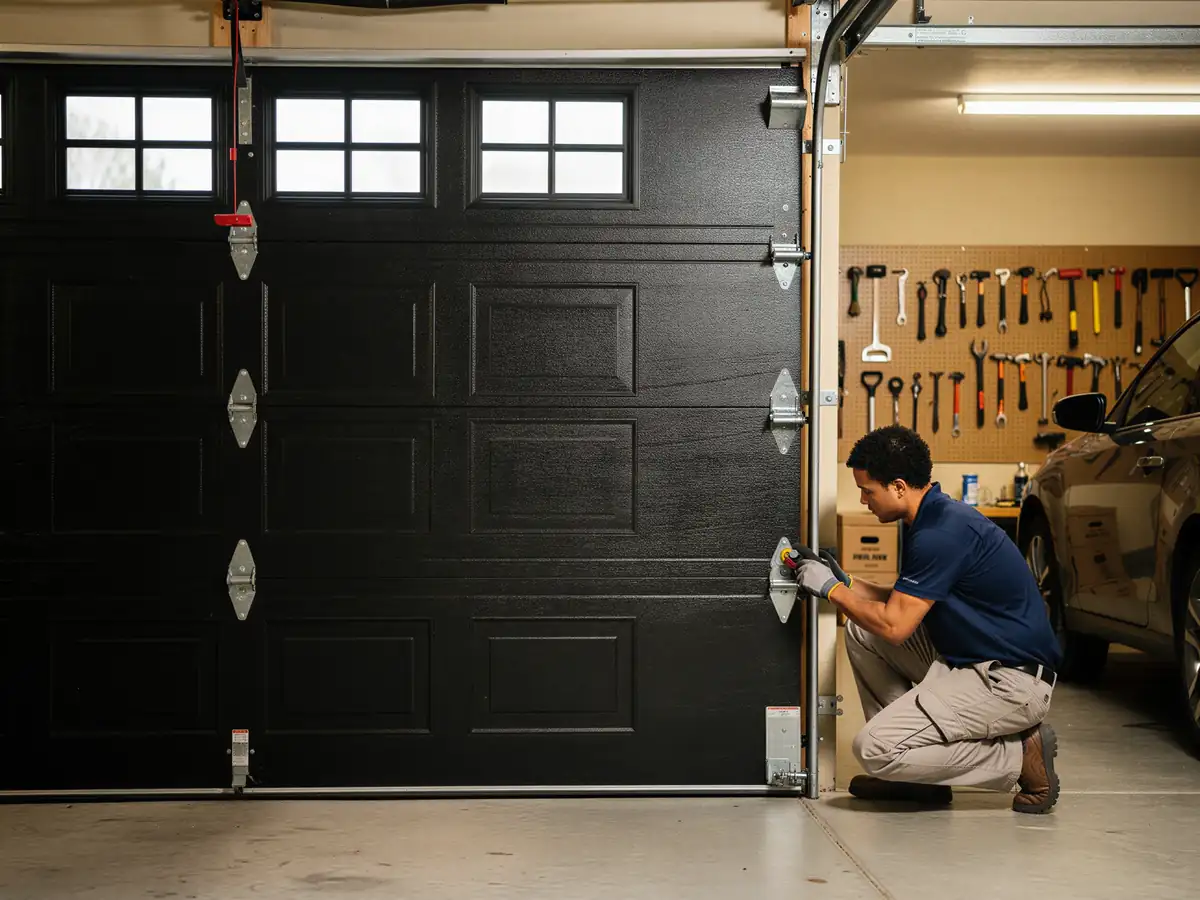
A rhythmic thump, once per roller pass: a flat spot on a roller, or a bent track section
A sharp metallic pop right as the door starts moving
A spring that's close to failing, or has already lost tension unevenly.
A grinding sound at the top of travel
Worn bearing plates on the torsion shaft, common once a system's past its original service life.
A loud bang with no door movement afterward: the spring has broken
Stop using the opener and call.
A low hum or rattle along the whole run
Loose track bolts, which show up more in houses where the door hasn't been serviced since it was installed.
None of these get better by waiting
A flat roller wears the track faster. A spring that's audibly straining is closer to the day it snaps, not further from it.
Leaving It Alone
Here's the honest part: not every noise needs a truck out to your house. If your door is quiet 11 months a year and only complains on the coldest mornings, that's often just the metal doing what metal does in winter - a drop of lubricant on the rollers and hinges solves it. We'd rather tell you that than send someone out to upsell a spring job you don't need yet.
Where we draw the line is tension hardware. Springs and the cables attached to them store enough force to cause real injury, and on a door built in the 1975 median era for this area, that spring has usually seen more cycles than it was built for. If what you're hearing is a pop, a bang, or a grind that's gotten worse over a few weeks, that's not a lubricant problem anymore. That's a phone call.