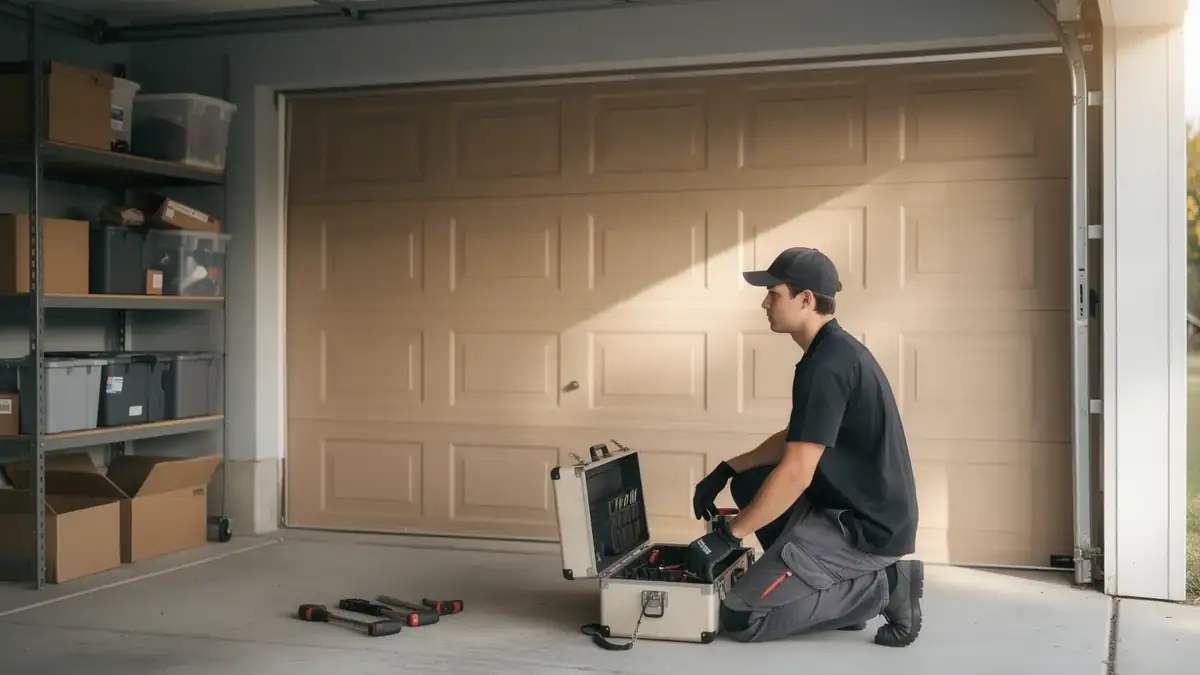
When It Stops Being a DIY Job
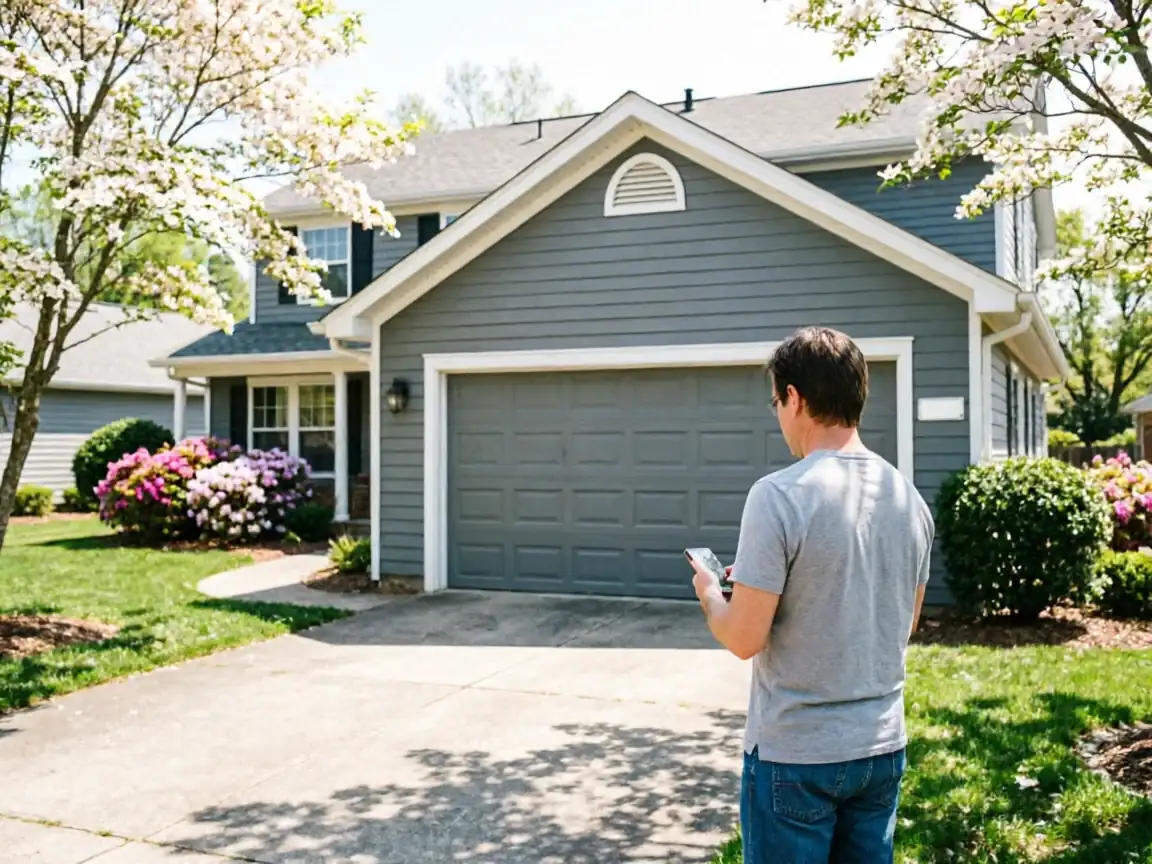
Most of the houses across Jackson's service areas went up between 1960 and 2004, with the median sitting around 1975. That matters more than people think. A door from that era is usually running torsion hardware sized for a lighter door than what's hanging on it now, or it's been retrofitted once already by whoever owned the place before you. YouTube videos about adjusting spring tension assume a modern door with modern hardware. Half the doors we see in this town don't match that assumption.
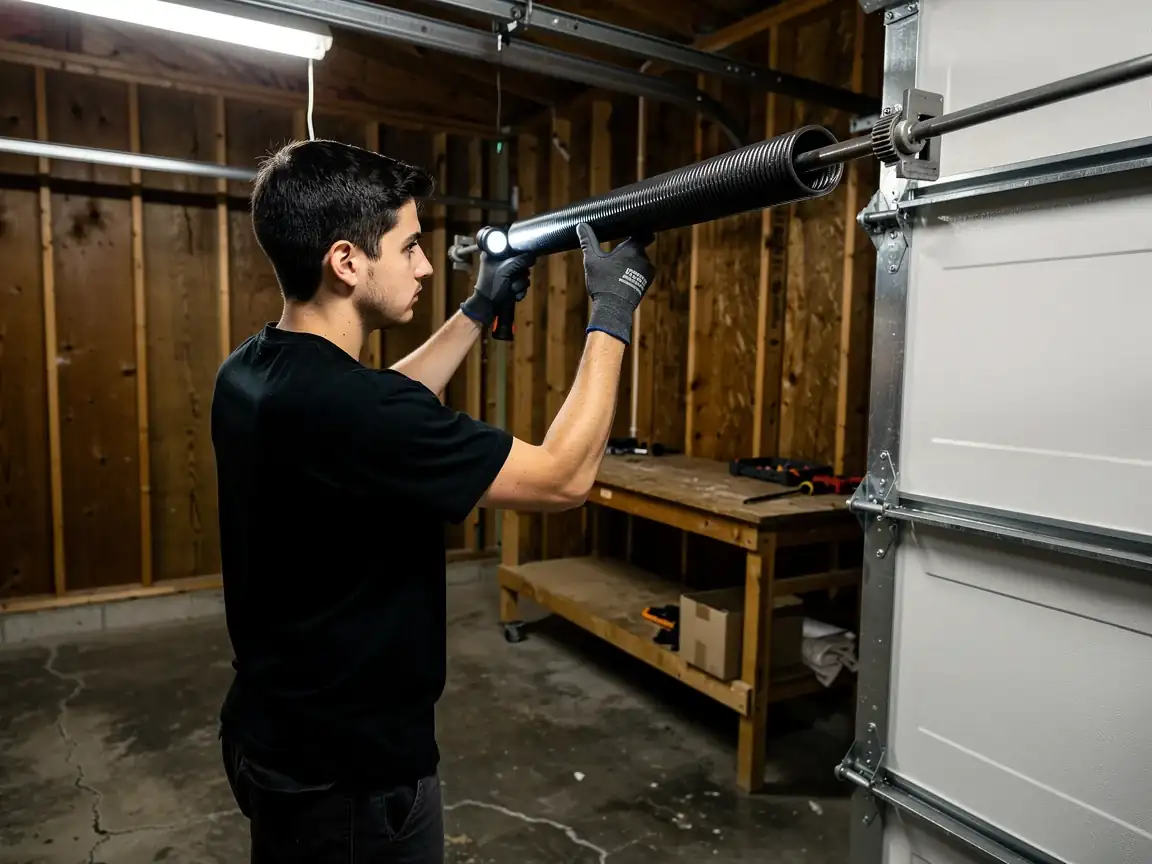
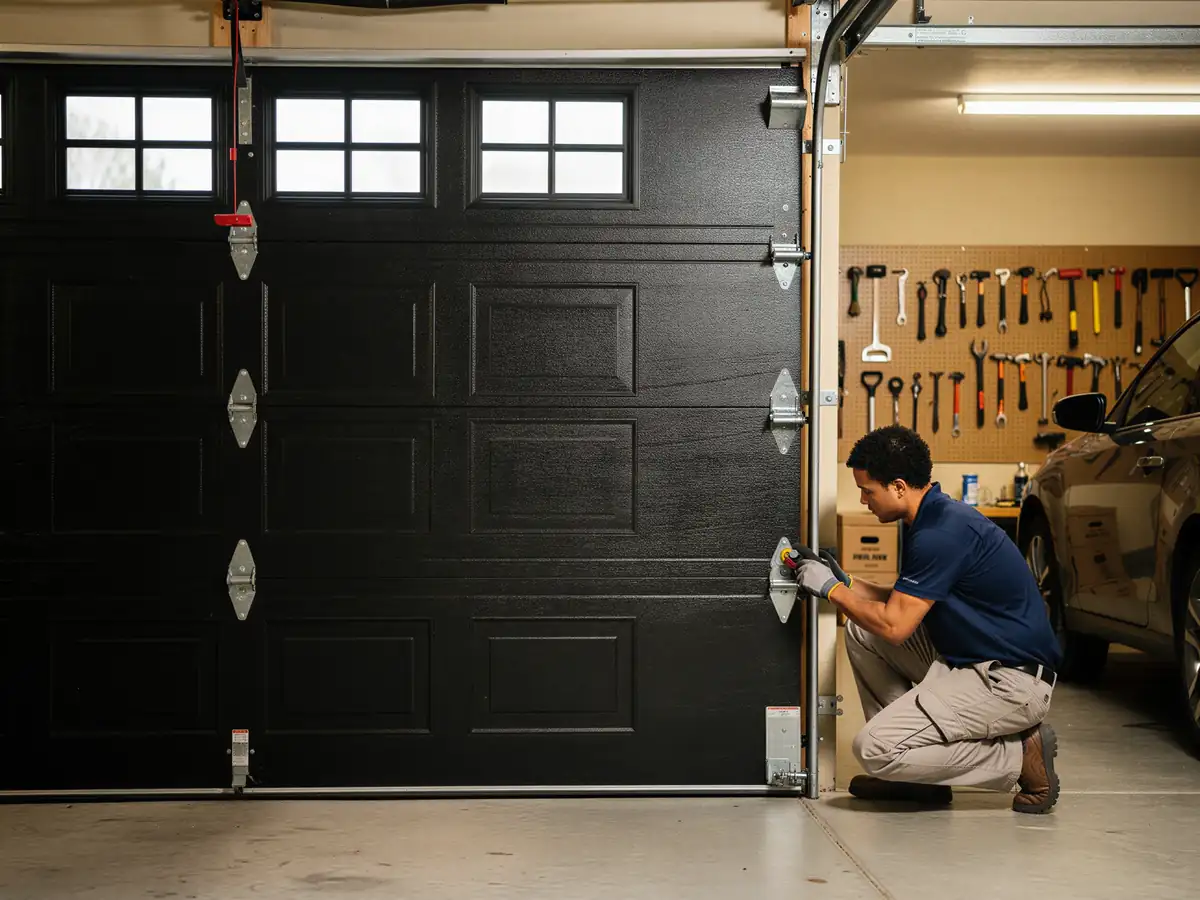
The line for us is simple: anything that touches a spring under tension, anything where the cable has started to fray, or anything where the track has pulled away from the framing is not a weekend project. You can tighten hinges, lubricate rollers, and clear the track yourself. Past that, the hardware on a house built in the 1960s or 70s often needs parts that aren't sold at a hardware store, and guessing wrong with a wound spring is how people get hurt. A service call starts with us figuring out what generation of hardware we're actually working with before anyone touches a wrench to it.
How Local Conditions Play In
Jackson sits in a cold-moderate climate band, and that shows up in the metal before it shows up anywhere else. A torsion spring that's fine in July can bind or lose tension by January, because steel contracts in the cold and the lubricant inside an older spring thickens. On a door that's been in service since the 1960s-70s building wave this area saw, that spring has already gone through forty-plus seasonal swings. Fatigue in the coil doesn't announce itself - it just breaks one morning when the door is halfway up.
Moisture plays a role too. Garages in this climate band see condensation on cold mornings, and that works on exposed cable ends and the bottom of steel tracks over years. A service call in Jackson includes a look at where rust has actually started, not just whether the door opens and closes today. We're checking the spring's winding, the cable ends, and the track alignment with this area's temperature range in mind, not a generic checklist written for a warmer or more humid part of the country.
What Is Going On
When you call, we're trying to answer one question first
Is this a worn part failing on schedule, or something installed wrong from the start. Given how much of the housing stock here dates to the 1960s-70s wave, a lot of what we find is parts simply reaching the end of a normal service life - a spring that's cycled tens of thousands of times, rollers that have worn their bearings out, a cable that's frayed from age rather than damage.
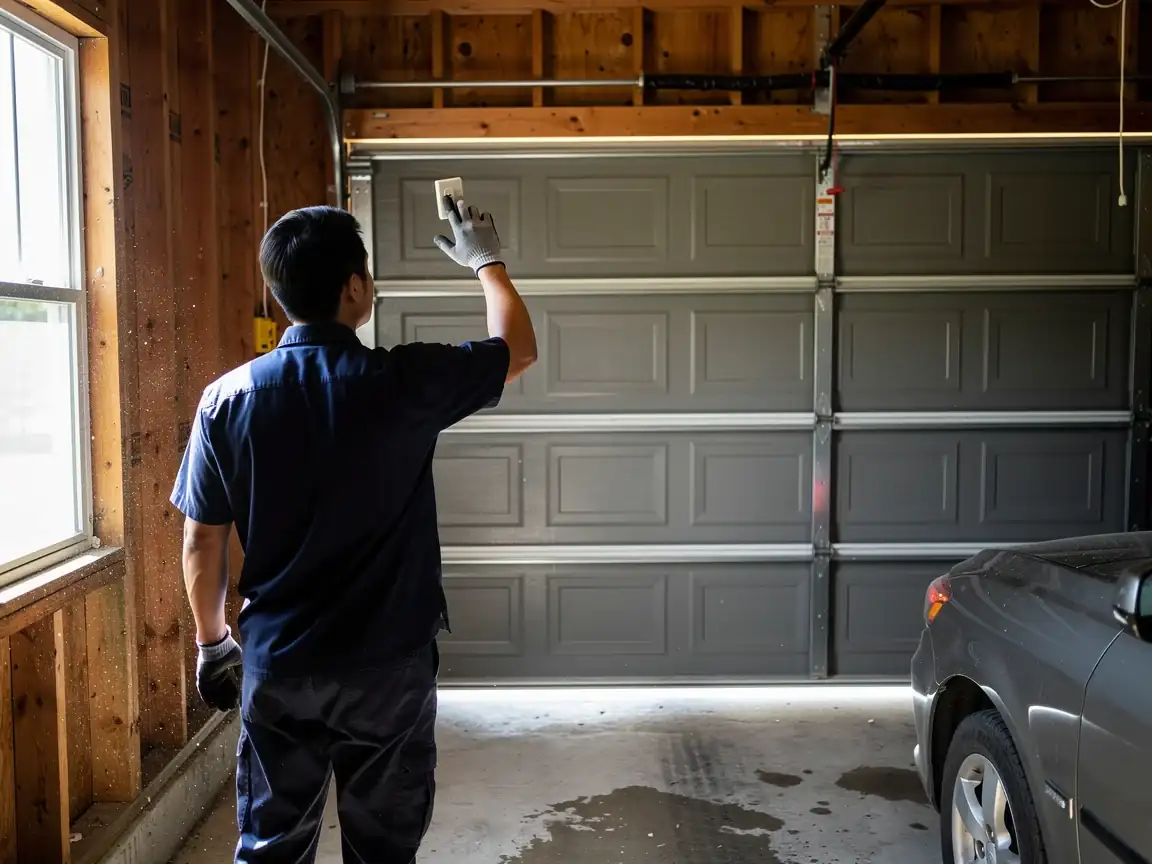
We test the balance of the door by hand, check the spring winding against what the door's weight actually calls for
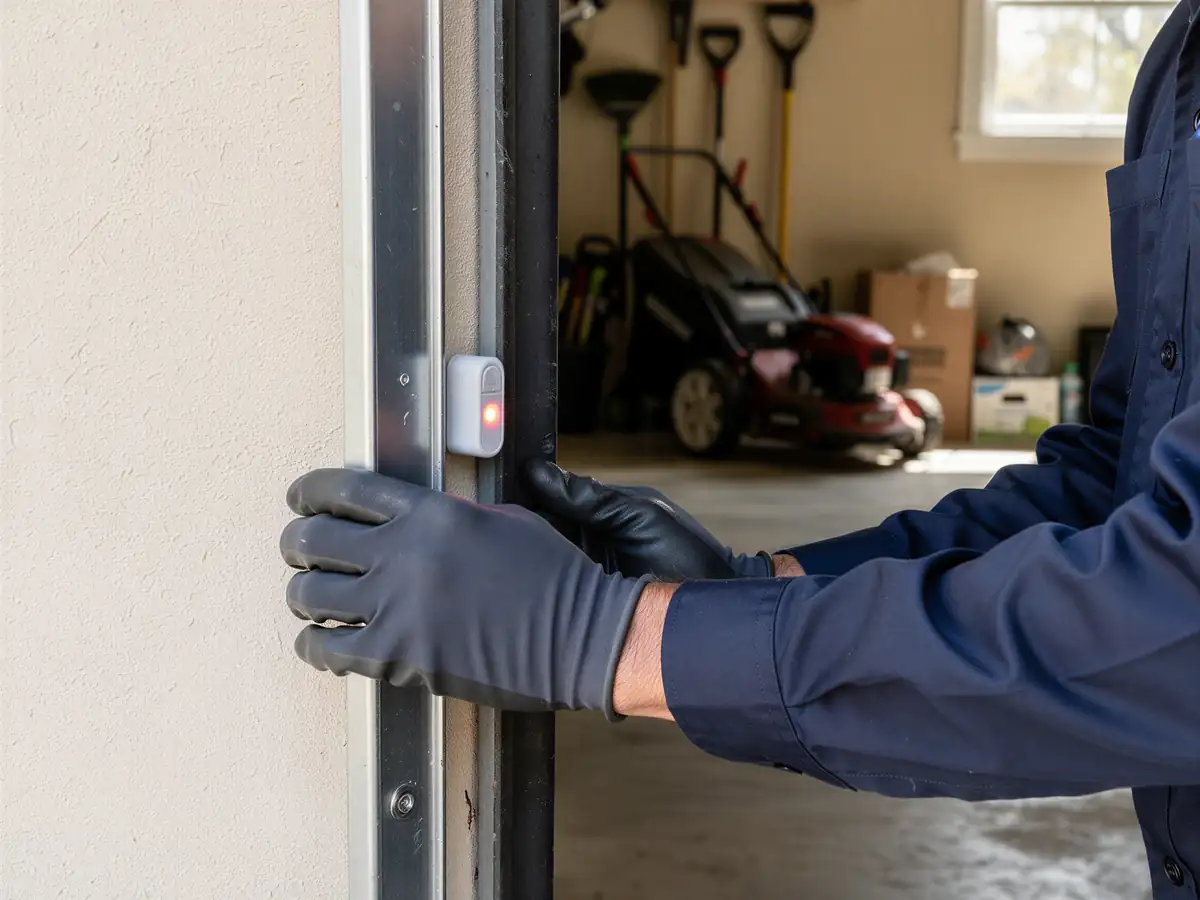
And look at whether the opener's force settings have been drifting to compensate for a problem instead of fixing it. On houses from that median 1975 construction window, we also check whether the track spacing still matches the door, since additions and garage conversions over the decades sometimes shifted things slightly. The goal of the call is a straight answer - this part is worn, this part is fine, this is what it'll take to fix it - not a sales pitch dressed up as a diagnosis.
Leaving It Alone
Here's the honest part: not every door is worth repairing. If the door is old enough that the track, spring, and panels are all near the end of their life at once, patching one piece just moves the next failure a few months down the road. We'll tell you when that's the case instead of running up a bill on a door that's circling the drain anyway.
We also don't stock every part for every era of hardware on the truck. Some older torsion systems from this area's building boom use components that take time to source, and we'd rather tell you that up front than promise a same-day fix we can't back up. If a part has to be ordered, we'll say so before we start, not after.
We work out of Jackson and cover the surrounding area, including Three Way, Medina, Gadsden, Humboldt, Bells, Gibson, Henderson, Alamo, and Milan. If you're closer to one of those towns than to Jackson proper, the same housing-age and climate reasoning above still applies - it's the same building stock spread across the county.