When It Stops Being a DIY Job
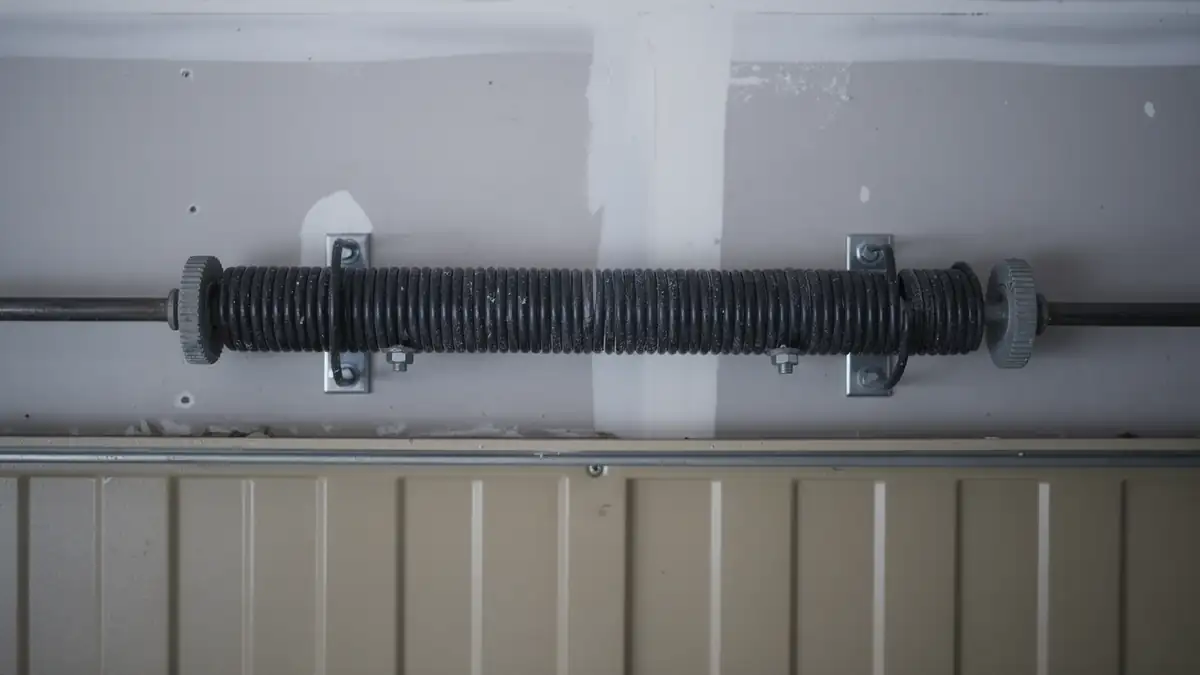
A torsion spring under tension is not a part you want to learn on. In Jackson, most houses went up between 1960 and 2004, with the median landing around 1975, which means a lot of garages still carry the original torsion hardware or a first-generation replacement. That gear was built to a different tolerance than what's sold today, and the shaft, end bearing plates, and winding cones don't always match current stock sizes.
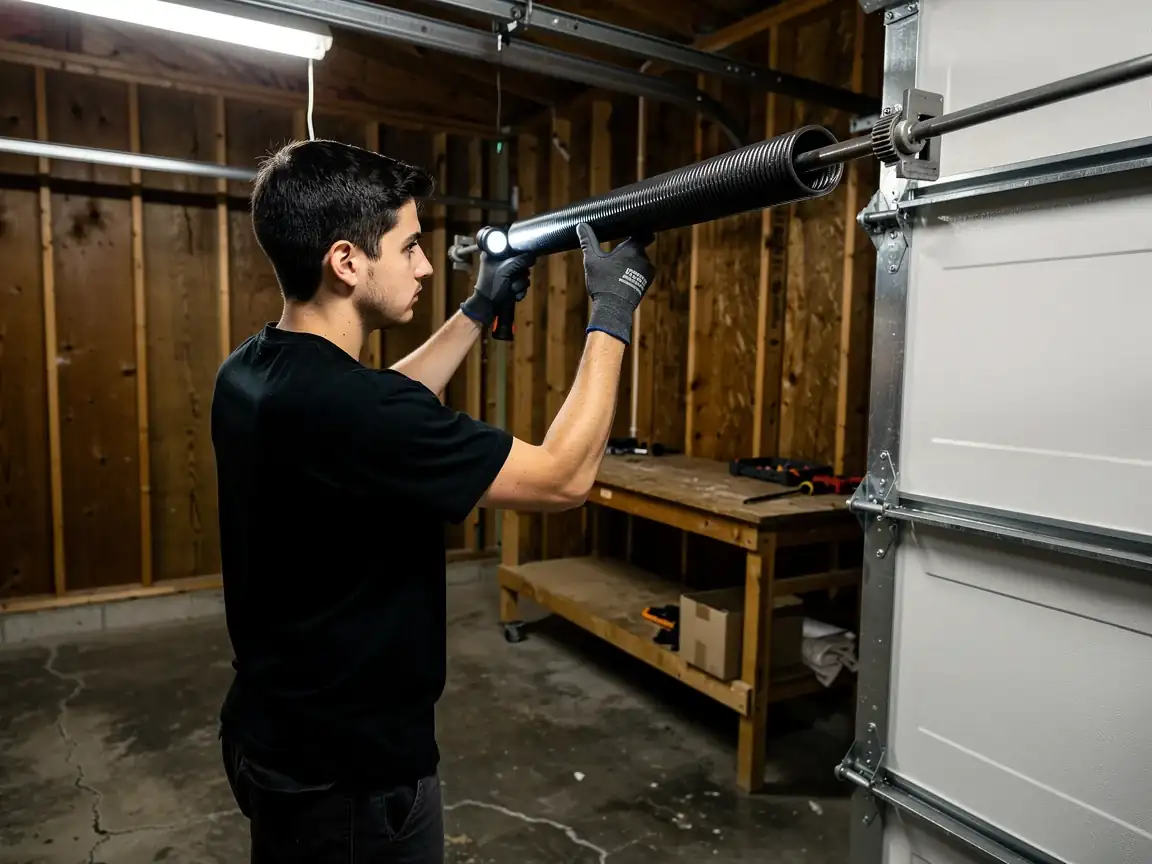
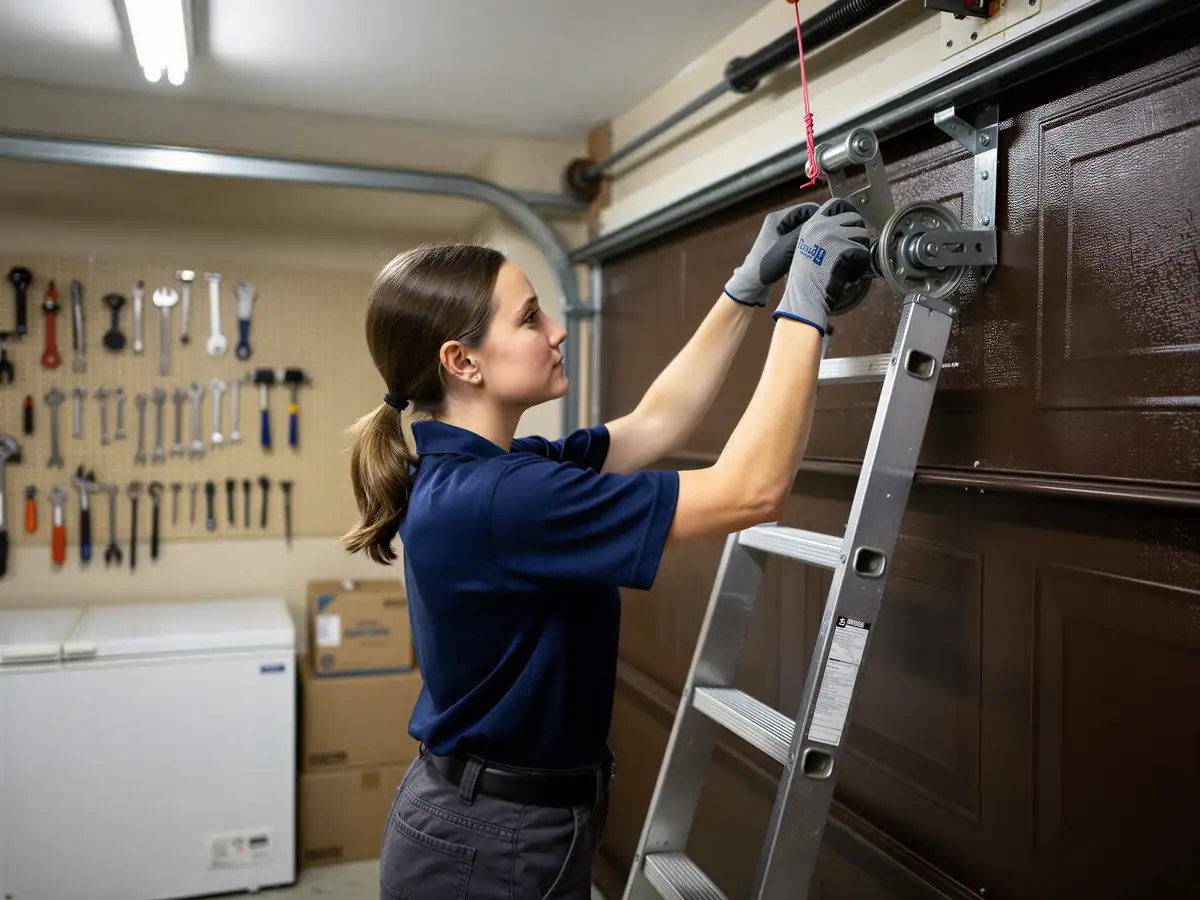
If the spring has already let go - door won't budge, or it slams down fast when you pull the release - that's the line. Winding a new spring means loading several hundred pounds of torque onto a bar, by hand, often in a garage that's colder than the house. One slipped winding bar and you're looking at a trip to the ER, not a repair bill.
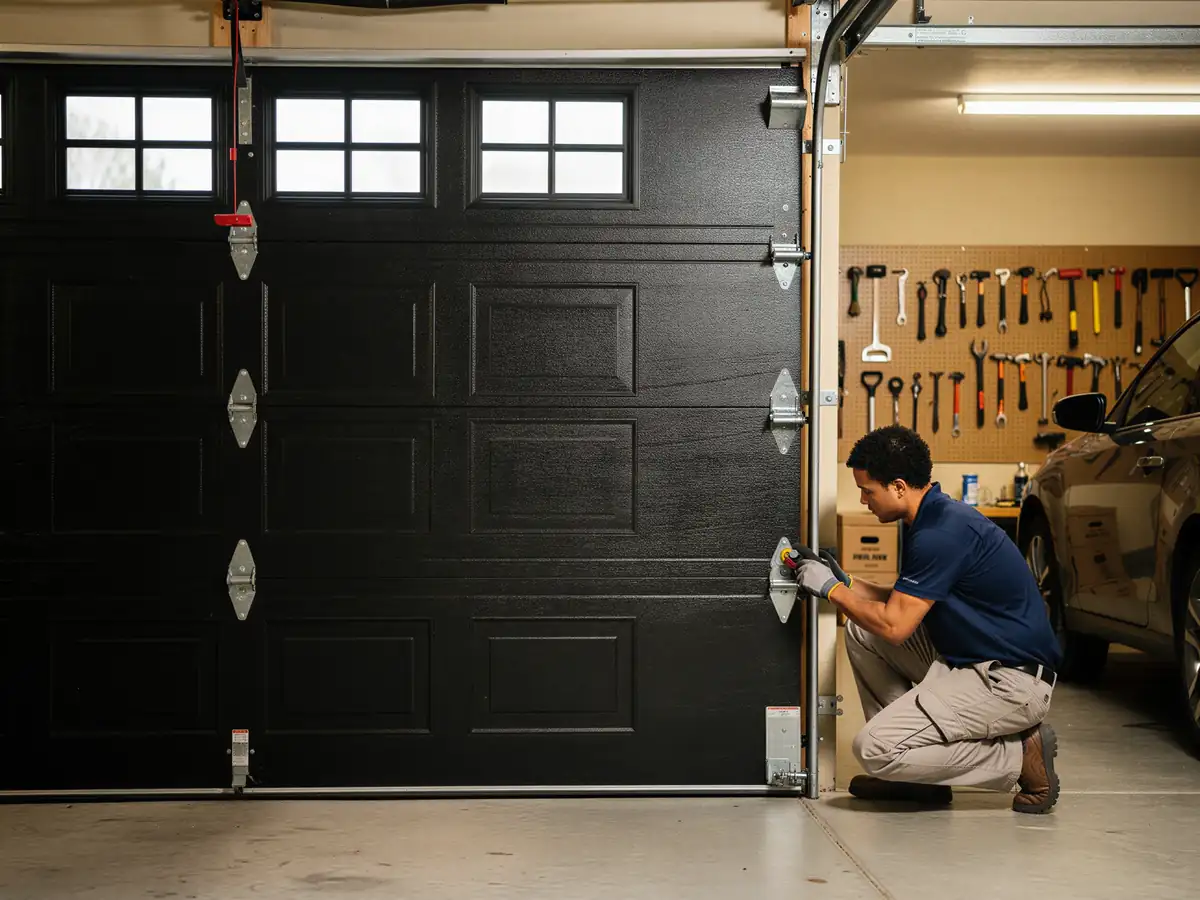
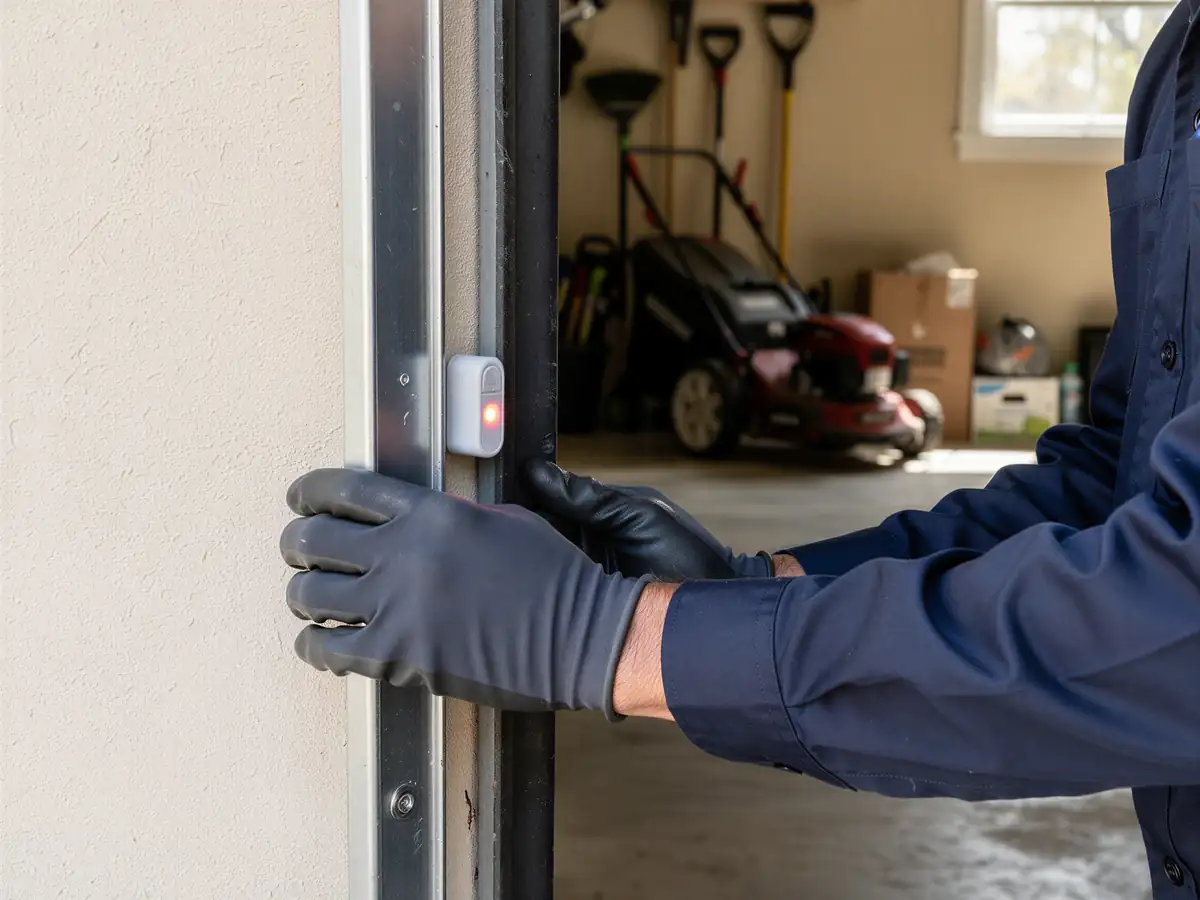
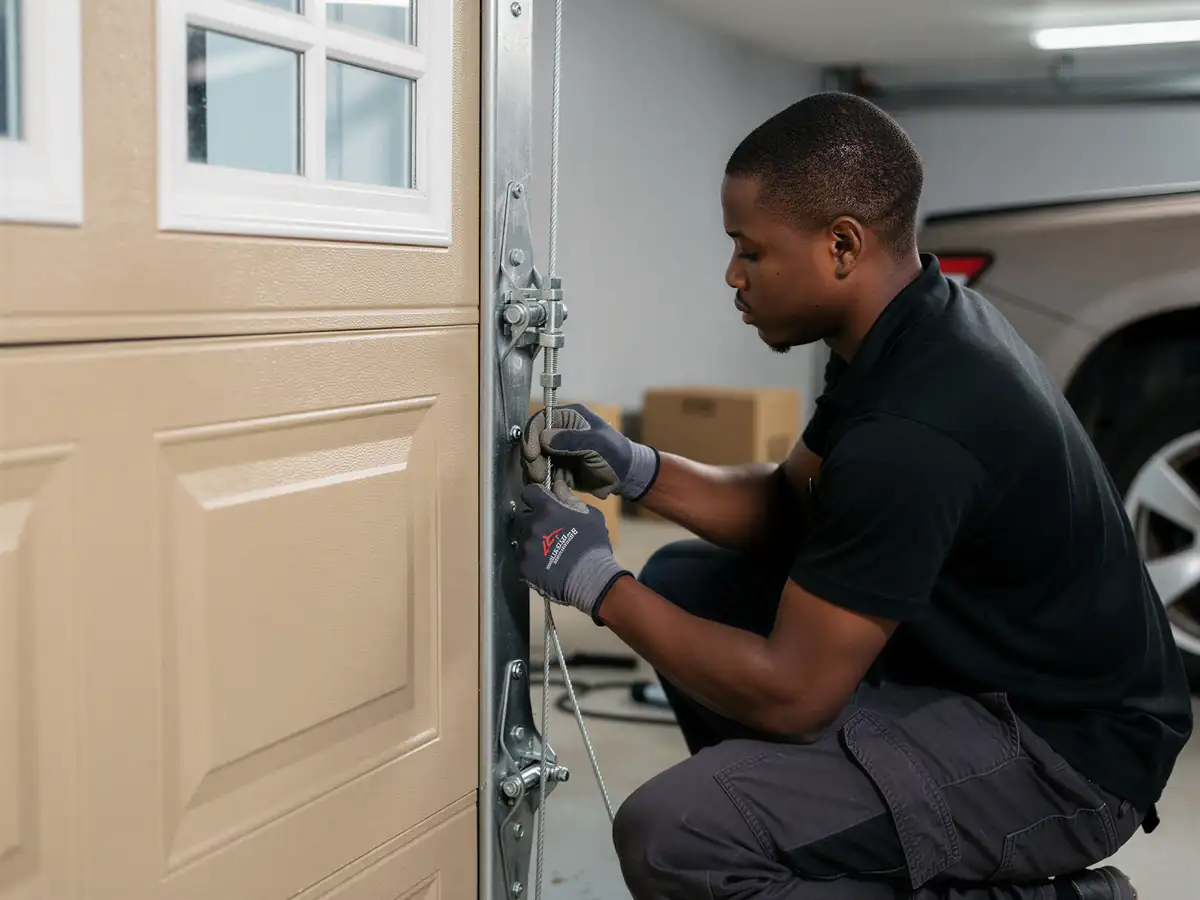
What you can safely do yourself: check the cables for fraying, listen for a grinding roller, snug a loose bracket bolt. What you shouldn't: touch the spring, the cables under tension, or the bottom brackets on a door that's down and won't lift. If you're not sure which side of that line you're on, treat it as the dangerous side.
How Local Conditions Play In
Steel springs lose flexibility as temperature drops. A spring that's been quietly fatiguing all year - rust in the coils, a few thousand cycles past its rating - is far more likely to finally snap on a cold morning than a mild afternoon in July.
That's not a quirk of any one brand of spring. It's physics acting on hardware that, in this area, skews older than national average because of the 1960-2004 build window. Combine a 50-year-old torsion setup with a cold snap and the failure shows up exactly when you need the door most - heading out in the morning, cold engine, door won't open.
If your opener has been straining audibly on cold mornings, or the door feels heavier to lift by hand in winter than summer, that's the spring telling you it's losing tension before it fully breaks.
What Is Going On
Across the nine areas that make up this service footprint, the housing stock runs mostly 1960s-70s construction
Which puts a huge share of doors and openers well past any reasonable service life. A torsion spring is rated in cycles, not years - typically somewhere in the 10,000-cycle range for standard residential springs - and a door used twice a day for forty-plus years has run through that rating many times over, regardless of how well it looks.
What often gets mistaken for "the opener is dying" is actually the spring giving out its tension gradually
The opener motor straining harder, the chain or belt sagging under extra load it was never sized for, the door drifting down a few inches on its own. None of that means a new opener. It means the spring is no longer doing its job and the opener is compensating until it can't.
On a double door especially
Heavier, two springs working together - an unevenly worn pair is common in homes this age, since springs rarely fail at the exact same time or rate.
Leaving It Alone
Here's the honest limitation: not every cold-weather spring complaint is worth a same-day emergency call. If the door still opens and closes, just slower or with more opener strain than usual, that's a scheduling job, not a crisis. Jumping to an emergency visit for a door that's merely stiff costs you more than it needs to.
What isn't worth leaving alone: a spring that's already separated (you'll usually hear the bang), a door that won't stay up on its own, or cables that look frayed near the bottom bracket. Those turn into a stuck car in the garage or a door that drops on something it shouldn't.
Given the age of the housing stock around here - built mostly in that 1960-2004 window - a lot of these systems are due for a full hardware check anyway, not just a spring swap. Replacing a spring on a 50-year-old shaft with pitted bearing plates is a short-term fix. Sometimes the right call is replacing the pair and the plates together rather than patching one part and calling it done.