What You Pay
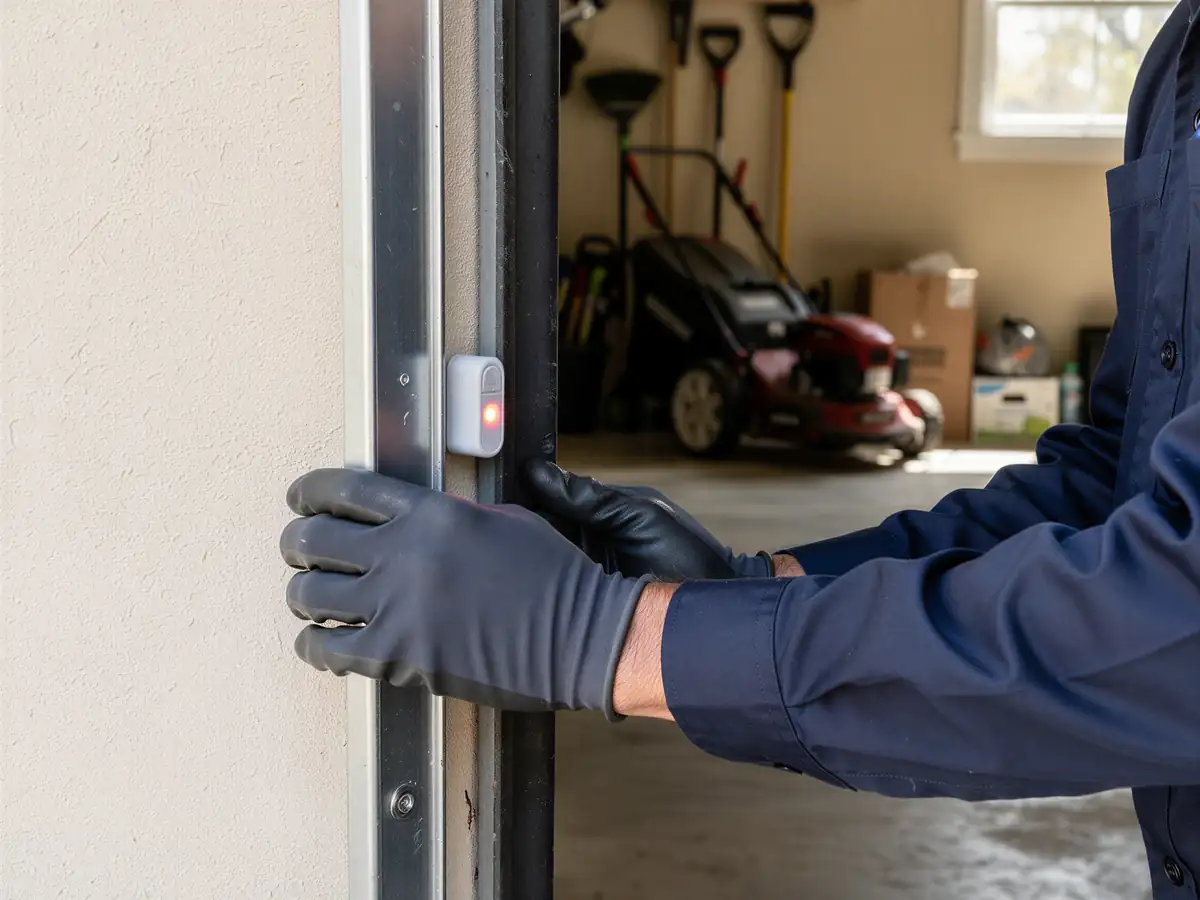
We don't post a flat number for opener repair because the fix depends on what's actually broken - a stripped gear set, a dead circuit board, a burnt-out capacitor, or just a misaligned safety sensor are four different jobs with four different parts costs. What we can tell you is how we price: we diagnose first, quote the repair before we touch anything, and never start work on a guess.
Across the Jackson service area, median household income sits at $54,132, and that number shapes how we talk to people about repair versus replacement. For most openers under ten years old, fixing the failed part is the cheaper and faster call. Once a unit is pushing fifteen-plus years and the board, the gear set, and the drive all show wear at once, we'll say so plainly instead of nickel-and-diming three separate repairs that add up to more than a new opener.
One honest limit: if your opener is an older chain-drive model with a board that's been out of production for years, we may not be able to source an exact replacement part. In that case we'll tell you upfront rather than stringing out a repair that won't hold.
The Symptom
The call usually starts one of a few ways. The opener motor runs - you can hear it - but the door doesn't move, or moves a few inches and reverses. The remote works from the driveway but not from inside the car. The opener grinds on the way up, especially on cold mornings, then quiets down once it warms up. Or the safety light blinks a pattern and the door won't close at all.
In Jackson's cold-moderate climate, that last pattern - fine by afternoon, stubborn at 6 a.m. - points toward grease that's stiffened overnight working against a motor and gear set already under load. It's not a wiring problem most of the time; it's mechanical resistance the opener is fighting every time the temperature drops.
Grinding paired with a burning smell is usually the gear set itself, a nylon or composite part designed to strip before it damages the motor. That's a repair, not a death sentence for the opener, as long as the motor and board test out fine underneath it.
What Causes It Around Here
Jackson's housing runs mostly 1960 to 2004
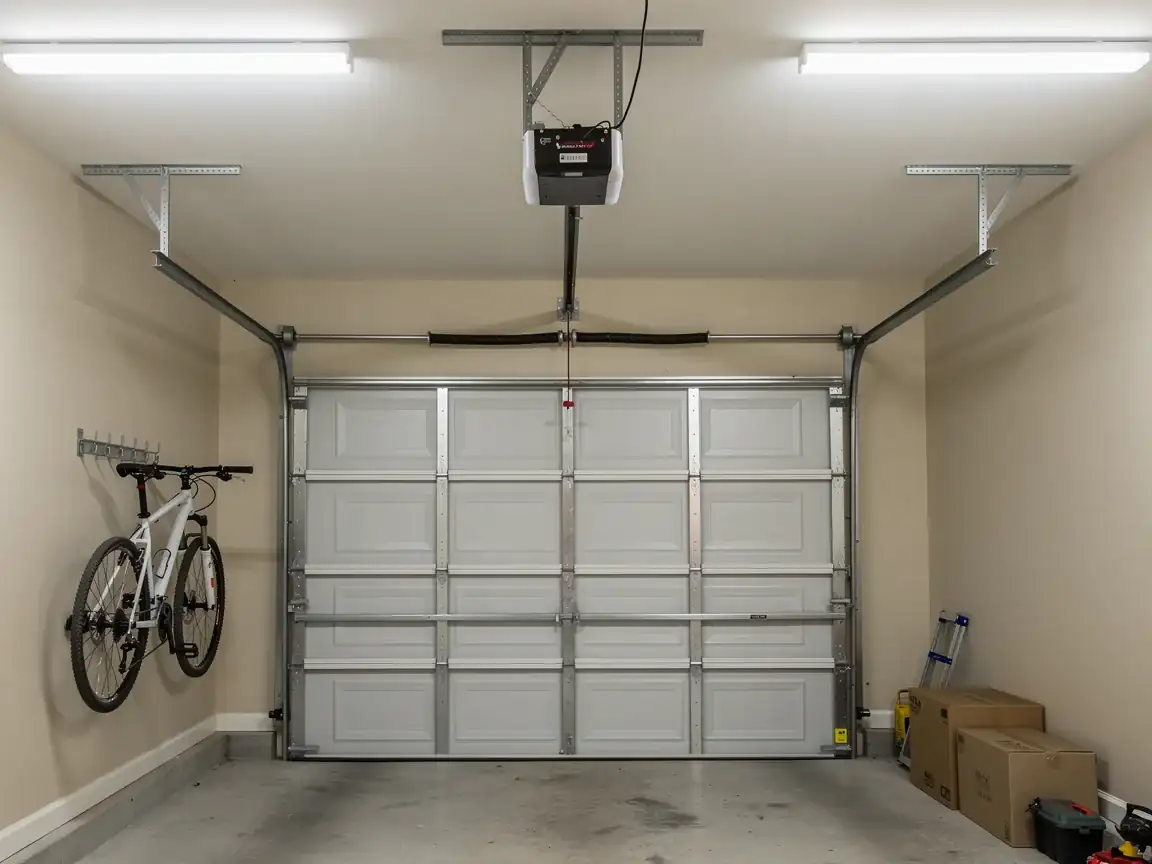
With a median build year around 1975, and across the nine named areas in the service territory the bulk of the stock is 1960s and '70s construction. That matters for openers specifically: a house built in 1968 has likely had at least one, often two, openers installed and retired since then, and whichever one is running now is doing it on original wiring, original wall switch runs, and sometimes original ceiling mounts that were never upgraded when the opener itself was swapped.
The cold-moderate climate band adds a second layer
Winter cold thickens lubricant inside the gearbox and tightens tolerances in the drive mechanism, so a gear set that's marginal in July fails outright in January. We see a seasonal bump in gear and capacitor calls every year for exactly that reason - it's not that the opener broke in winter, it's that winter is what finally asks the question the opener couldn't answer anymore.
Age and cold compound each other
An opener installed when a 1975-built house still had its original door hardware is carrying forty-plus years of thermal cycling before it ever shows a symptom.
The Complications
The Jackson service area covers an estimated 13,791 households, with 6,973 owner-occupied houses in that count, and we run into the same opener failure patterns across that whole footprint, not because the towns are identical but because the housing ages on a similar timeline. A board failure in a 1975 house in one neighborhood looks a lot like the board failure in a comparably aged house twelve miles out.
That said, this page covers opener repair across the wider area - Three Way, Medina, Gadsden, Humboldt, Bells, Gibson, Henderson, Alamo, and Milan all sit within roughly 8 to 18 miles of Jackson, with just southeast. The specific wiring quirks, permit requirements, or common opener brands in any one of those towns aren't something we're going to generalize here; that detail belongs on that town's own page, not this one.
The real complication on the repair side is parts availability. Opener models get discontinued, and a board or logic unit for a quarter-century-old unit sometimes just isn't manufactured anymore. When that happens, we say so instead of pretending a universal part will work.