What You Pay
We don't post a flat number for Milan because a repair bill depends on what's actually broken, not on the zip code. What we can tell you is what drives the estimate: the age of the door, whether the spring is a standard torsion size or something odd a builder used back when the house went up, and whether we're swapping a part or replacing the whole opener. Milan sits about 18 miles from our Jackson base, and the quote you get accounts for the job itself, not a separate trip charge baked in as a surprise. If you're calling around for a ballpark, ask what's included in any number you're given - labor, the part, and whether a second trip for parts gets billed again. We'll walk you through what we're charging for before we start, not after.
One honest note: if your door is original to a house built in the 1970s, parts for that era sometimes have to be special-ordered, and that adds to both the time and the final number. We'd rather tell you that up front than let you find out when the truck is already on your driveway.
Can You Do This Yourself
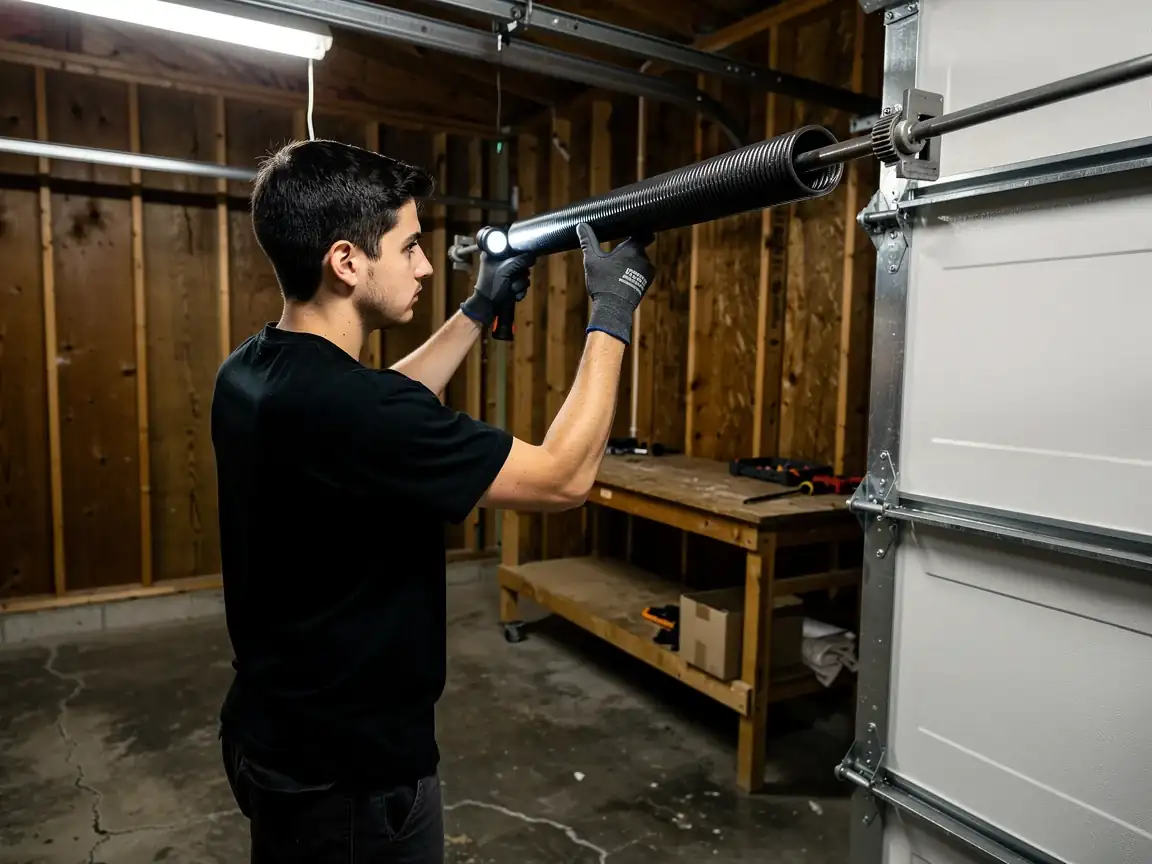
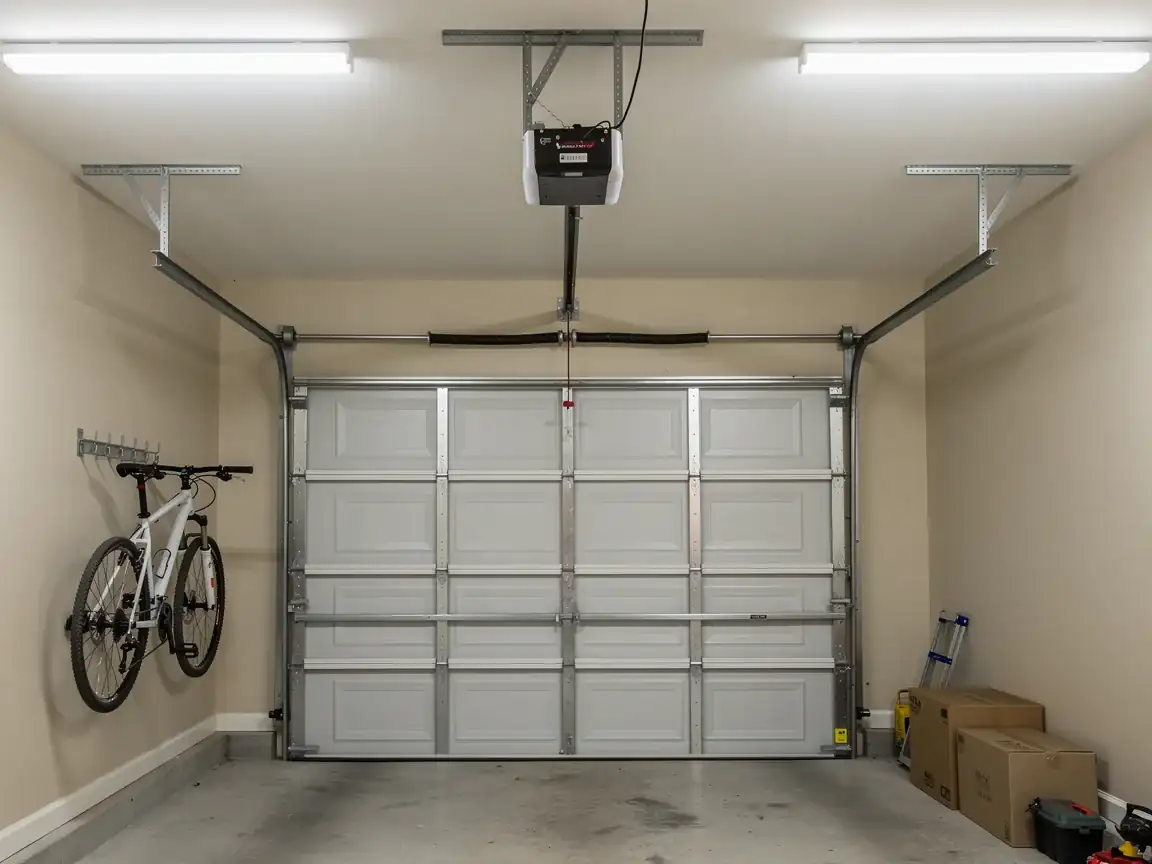
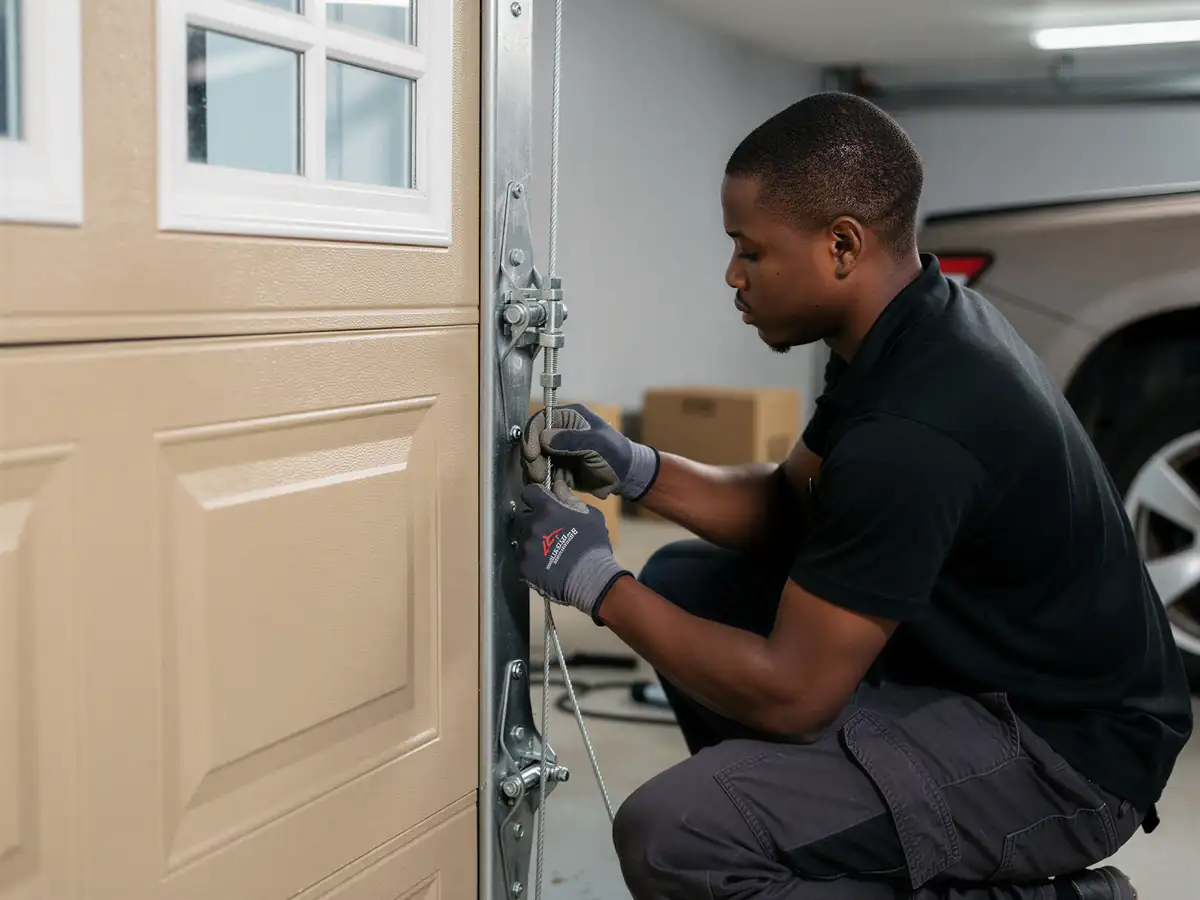
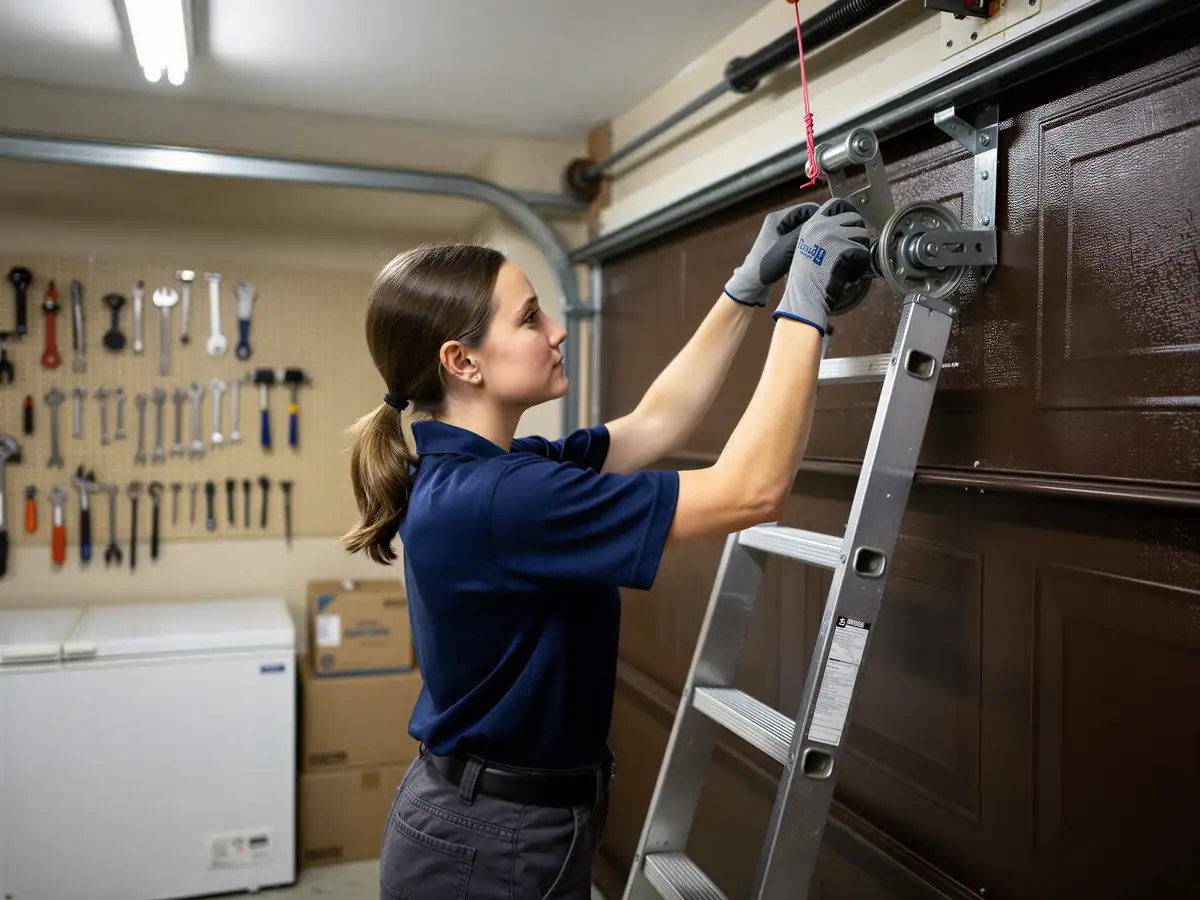
Some of it, yes. Lubricating rollers and hinges, tightening loose bolts on the track, replacing weatherstripping along the bottom - all of that is within reach for most homeowners with basic tools. What isn't: torsion springs. They're wound under heavy tension, and a slipped winding bar has put people in the hospital. Cable replacement carries the same risk for the same reason - it's load-bearing and it's unforgiving if you get the tension wrong.
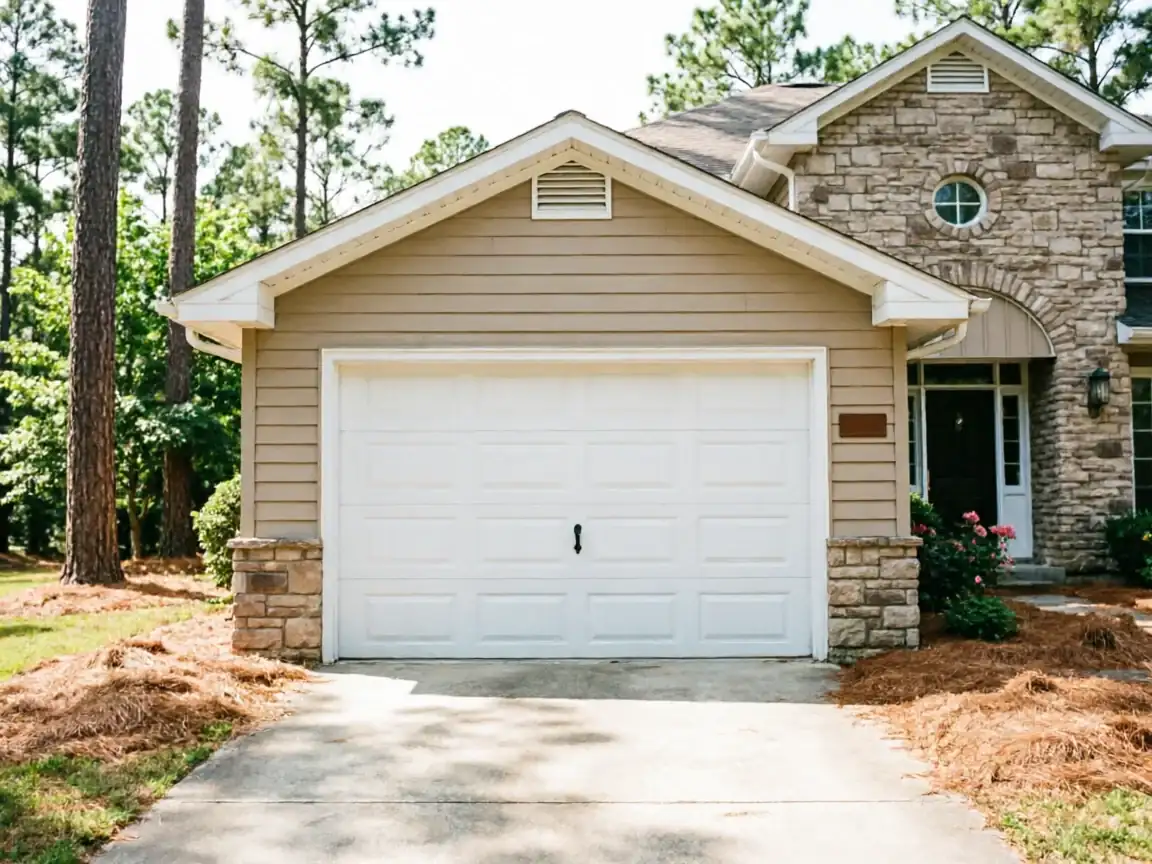
If your door is a single panel from the 1970s building boom around Milan, there's an added wrinkle: some of that older hardware doesn't match what's sold today, so even a simple-looking fix can turn into sourcing a part that isn't on a shelf anywhere nearby. That's a job worth a call before you start pulling things apart, not after you've already got the spring half-wound and no way to finish safely.
What Causes It Around Here
The housing around Milan mostly went up between the 1960s and the early 2000s
With the typical build year landing around 1975. Doors installed in that window were commonly single-layer steel on torsion hardware sized to specs that have since changed, and openers from that era - if they're even original - weren't built with the safety reversal sensors required on anything sold today. That combination is what we see most: a spring that's outlasted its rated cycles because nobody's touched it since the house was built, and an opener that's one failed capacitor away from quitting for good.
The climate here is cold-moderate, not the harsh freeze-thaw of further north
But still enough seasonal swing that steel panels contract and expand year over year. On a door that's 40-plus years old, that cycle works screws loose, stresses welded joints, and eventually shows up as a track that's pulled slightly out of alignment. It's slow damage, not sudden, which is why most calls come in as
How to Book
We cover Milan from our Jackson shop, so when you call, we're scheduling a trip out, not sending someone who's already in the neighborhood. That's worth knowing because it means we plan the visit around what you tell us is wrong - have the door's approximate age, whether it's a single or double, and what it's doing (won't open, stuck halfway, making noise) ready when you call. The more specific you are, the better we can show up with the right spring size or part on the truck instead of making two trips.
You can see what we cover in the area at Milan Garage Doors, and if you're comparing us against the broader Jackson service area, that's laid out at Garage Door Repair in Jackson, TN.
The Complications
The most common complication in Milan isn't the repair itself - it's parts. Hardware sized for houses built around 1975 doesn't always match current stock, and a torsion spring or a specific track bracket from that era can take longer to source than the repair itself takes to do. We tell you that cost and timeline difference before we order anything, not after.
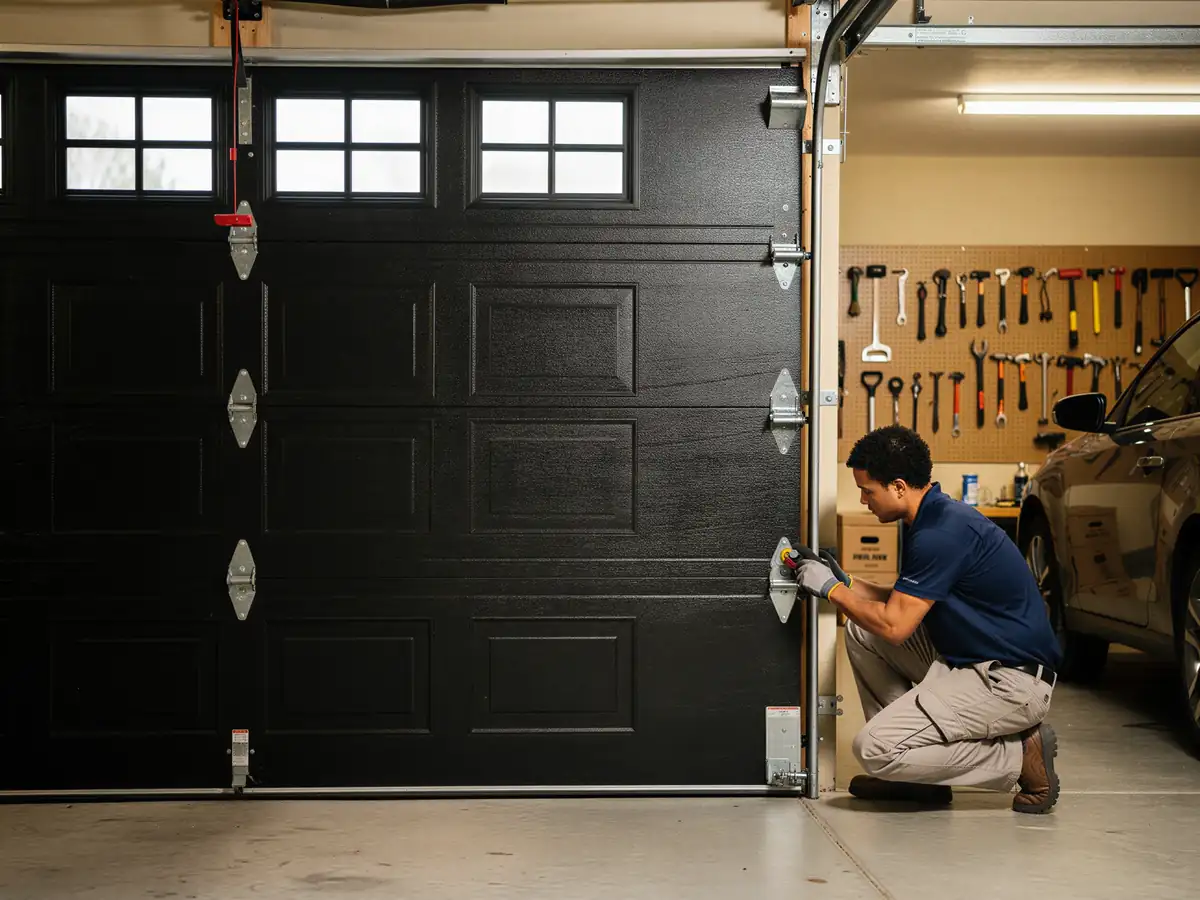
The other complication is diagnosis versus guessing. A door that's slow to close might be a failing opener, a misaligned safety sensor, or a spring that's lost tension - and treating the wrong one wastes your money. We check all three before quoting a fix.
And here's the limitation worth saying plainly: if a door is old enough and worn enough that the frame, track, and opener are all near the end of life at once, patching one part is sometimes just delaying a full replacement by a few months. We'll say so if that's what we find, instead of running up a repair bill that doesn't buy you much time.