What You Pay
Henderson sits about 18 miles out from our Jackson shop, and that drive is part of what you're paying for on a service call - there's no Henderson branch, no local depot, just a truck coming from Jackson. What you pay beyond that depends mostly on what's actually broken: a torsion spring job costs different money than an opener swap or a bent track pull.
Housing here runs a bit newer than the broader service area. Across the nine areas we cover, the median build year is 1975, but Henderson's own housing stock centers closer to 1979. That four-year gap doesn't sound like much until you're standing in front of the door - it's often the difference between an older spring-and-pulley setup and a door built after garage door openers became a standard builder add-on rather than an aftermarket extra. Newer doesn't mean problem-free; it means a different set of parts wear out first, usually the opener drive and the safety sensors before the springs themselves.
We don't post a flat number here because we haven't been asked to quote blind, and we'd rather tell you that than make one up. A phone call gets you a real number once we know what's failing.
Can You Do This Yourself
Some of this is reasonable to handle on your own. Tightening loose track bolts, clearing debris off the sensor eyes, lubricating rollers and hinges - none of that needs a truck from Jackson. If your door built in the late '70s or early '80s range still has its original hardware, a lot of those fasteners have simply worked loose over forty-plus years of use, not failed.
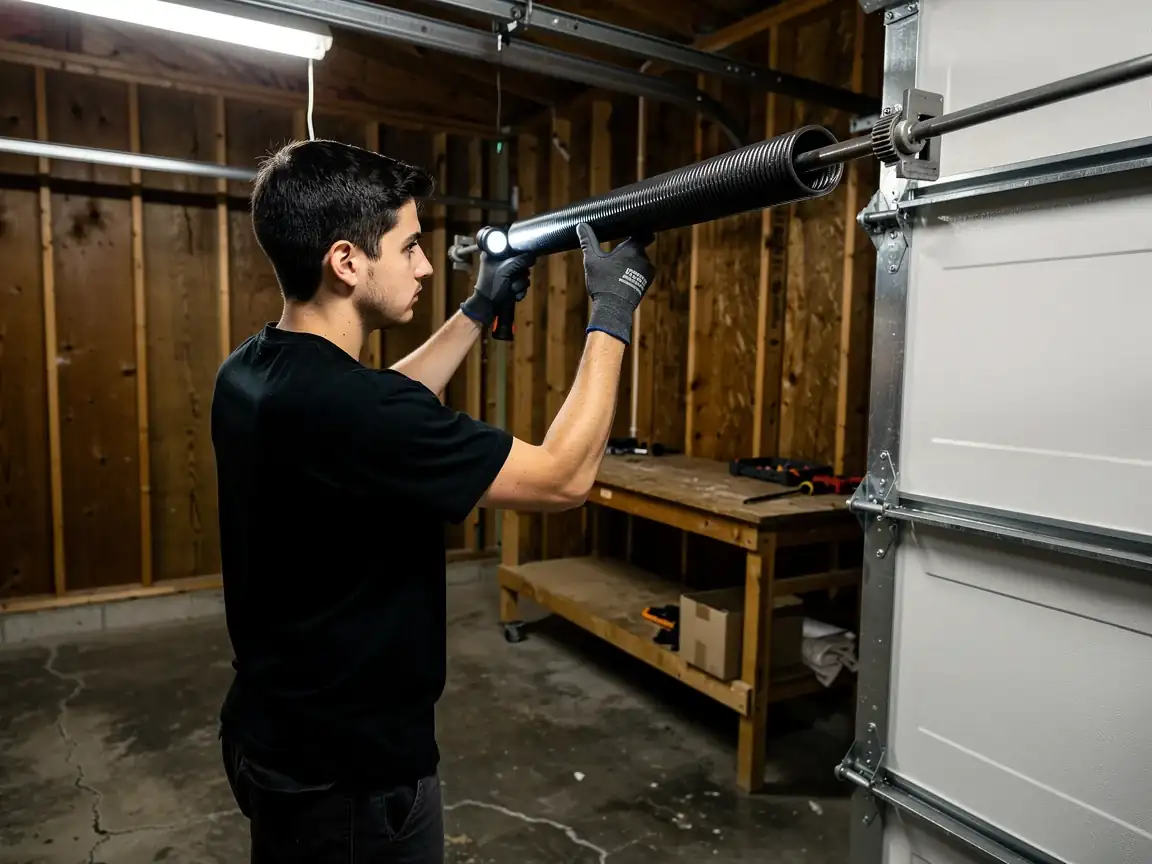
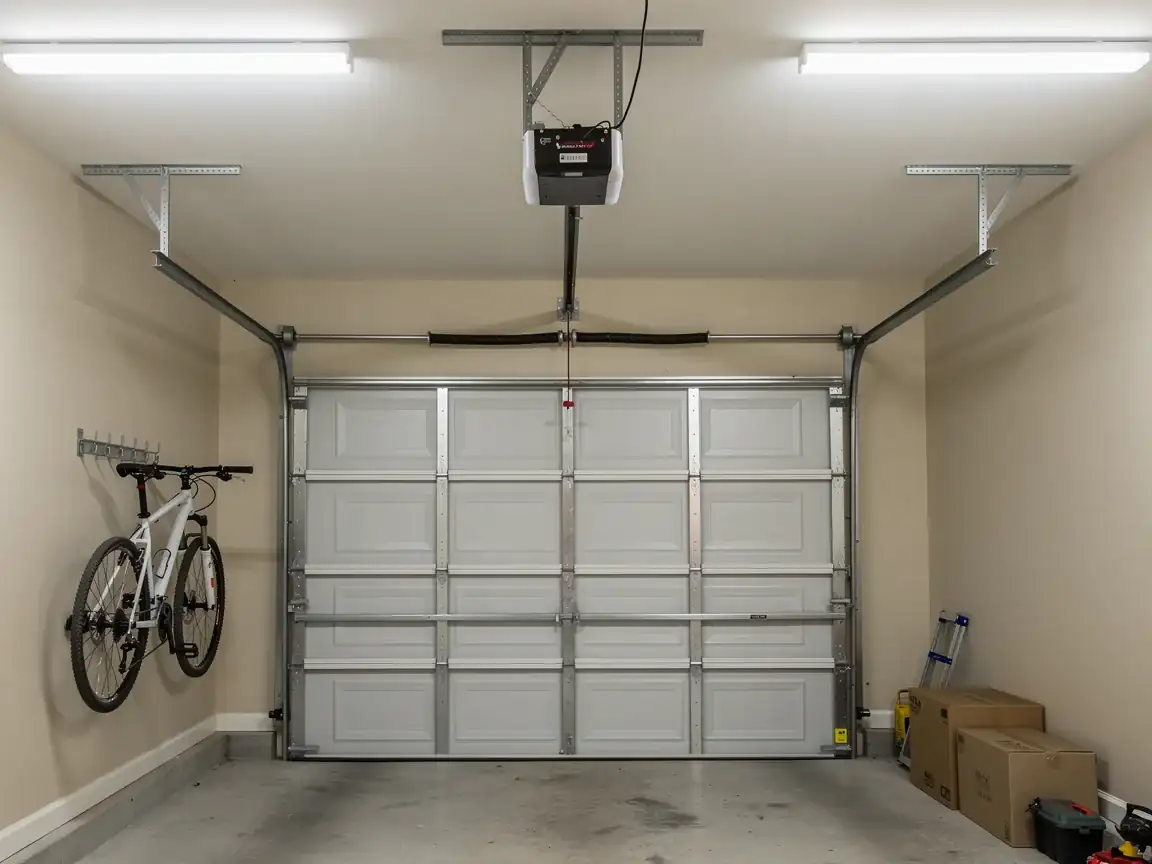
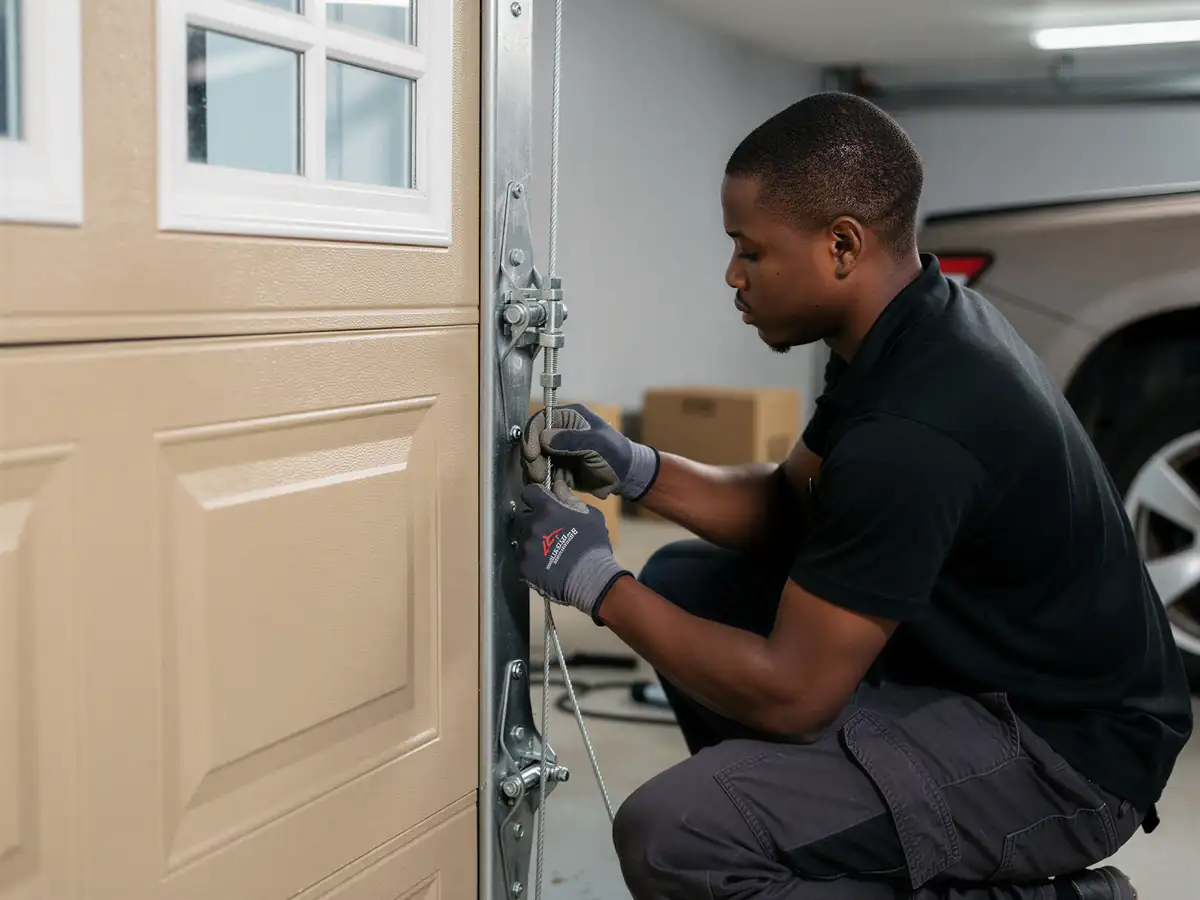
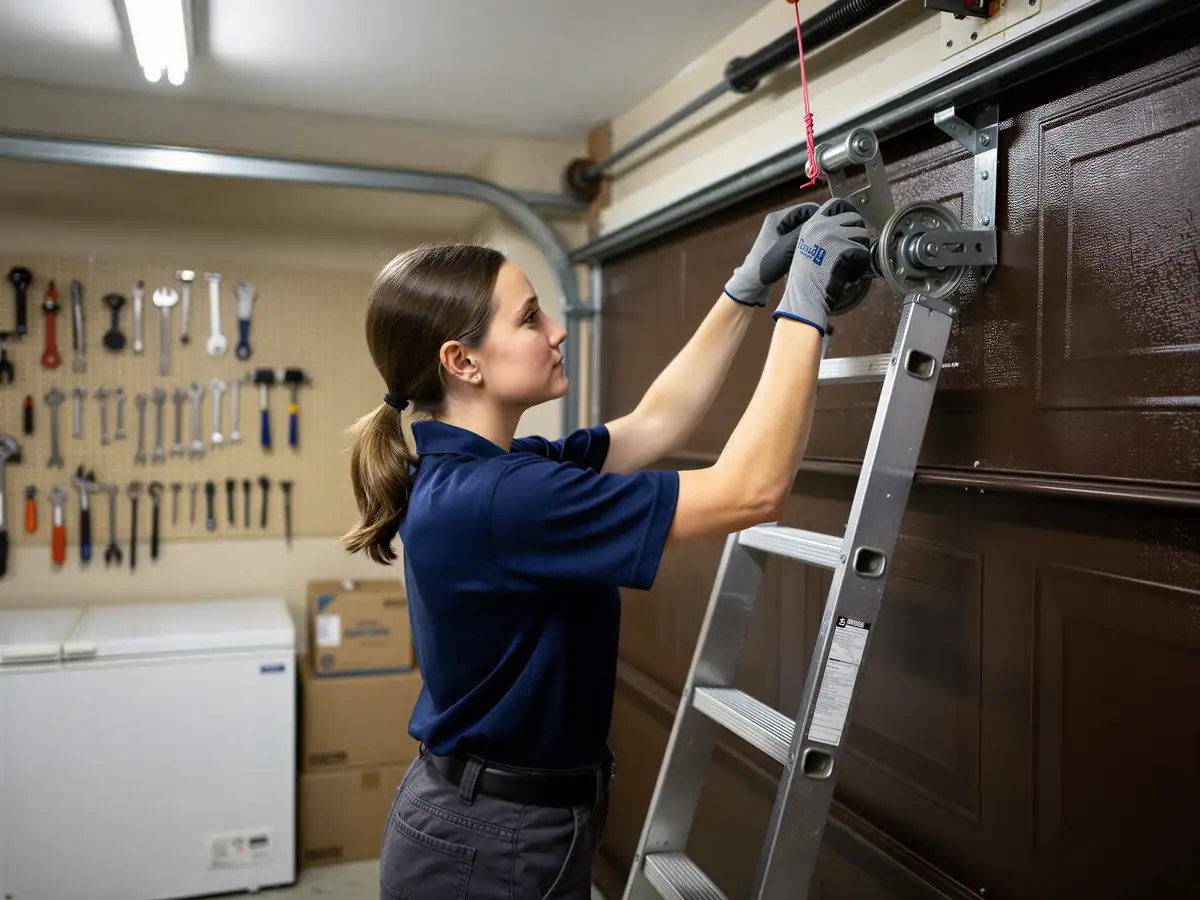
What you shouldn't touch is anything holding the door under tension - the torsion spring above the opening, or the cables running down to the bottom bracket. Those parts store enough force to break a bone or worse if you unwind them wrong, and that's true whether the door is five years old or forty-five. If your opener is original to a house built in that 1975-1980 window, the motor and logic board are also past any reasonable service life, and swapping one wrong wire can fry a board that was already on borrowed time.
We're not going to tell you to call us for every squeak. If a $4 can of silicone spray and five minutes with a wrench fixes it, do that first.
The Complications
The thing that catches people off guard in Henderson is that houses here don't all belong to one era the way they do in some tighter subdivisions
With 2,106 households spread across a build period that runs later than the regional median, you can have a 1965 door two doors down from a 1985 door, and they fail in completely different ways. The older one is more likely running a two-piece or three-piece section door with a single torsion spring and no reversing sensors at all. The newer one is more likely fighting a chain-drive opener whose gear kit wore out from the inside.
- 2,106 households
The cold winters here add their own complication regardless of the door's age
In a moderate-cold climate band, steel contracts, grease stiffens, and a spring that was barely getting by in October can snap on the first hard freeze. That's not a Henderson-specific event, but it hits houses with original 1970s-era springs harder than houses that already had a spring replacement at some point.
The other complication is simpler: we're coming from Jackson
That's fine for a scheduled repair, but it does mean we can't treat Henderson like a same-day walk-in territory the way a shop based in town could.
What the Repair Takes
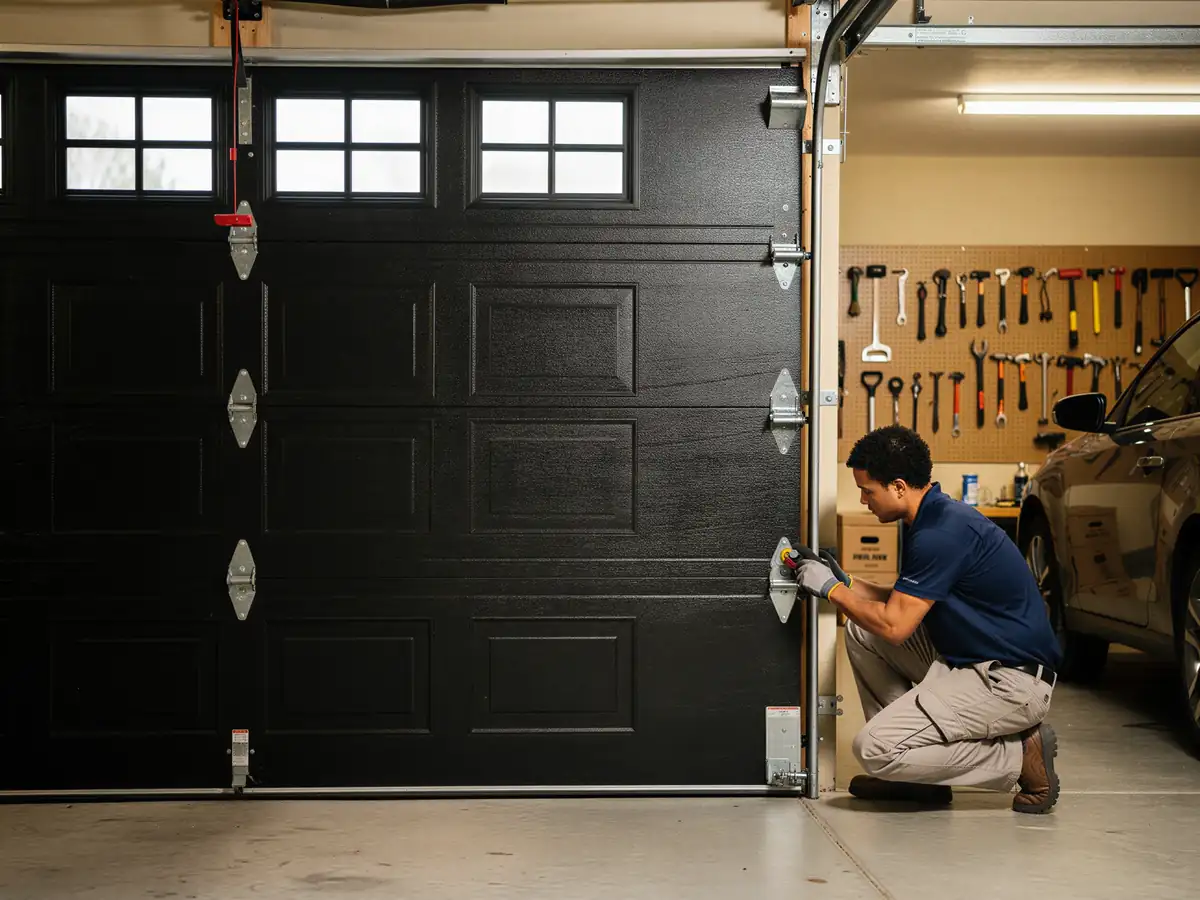
A straightforward torsion spring replacement on a door that matches Henderson's typical build era - say, that late-1970s standard two-car door - usually takes less time than diagnosing an intermittent opener fault, because the spring problem is visible and the opener problem often isn't. We'll test the door balance by hand, check cable wear at the bottom brackets, and only then decide whether the spring is the actual failure or just the symptom.
Parts availability matters more here than people expect. If your door or opener dates to the earlier end of the area's range, around 1960 rather than 1979, some original hardware - older spring winding cones, obsolete opener logic boards - isn't something we stock on the truck and isn't something we can promise same-visit. That's the honest limit: on an older or unusual unit, we may need to order a part and come back, rather than finish in one trip.
For a more typical Henderson-era door, most repairs finish in a single visit once we're on site, parts in hand, because the failure points on that generation of door and opener are well understood and the hardware is still current.