What You Pay
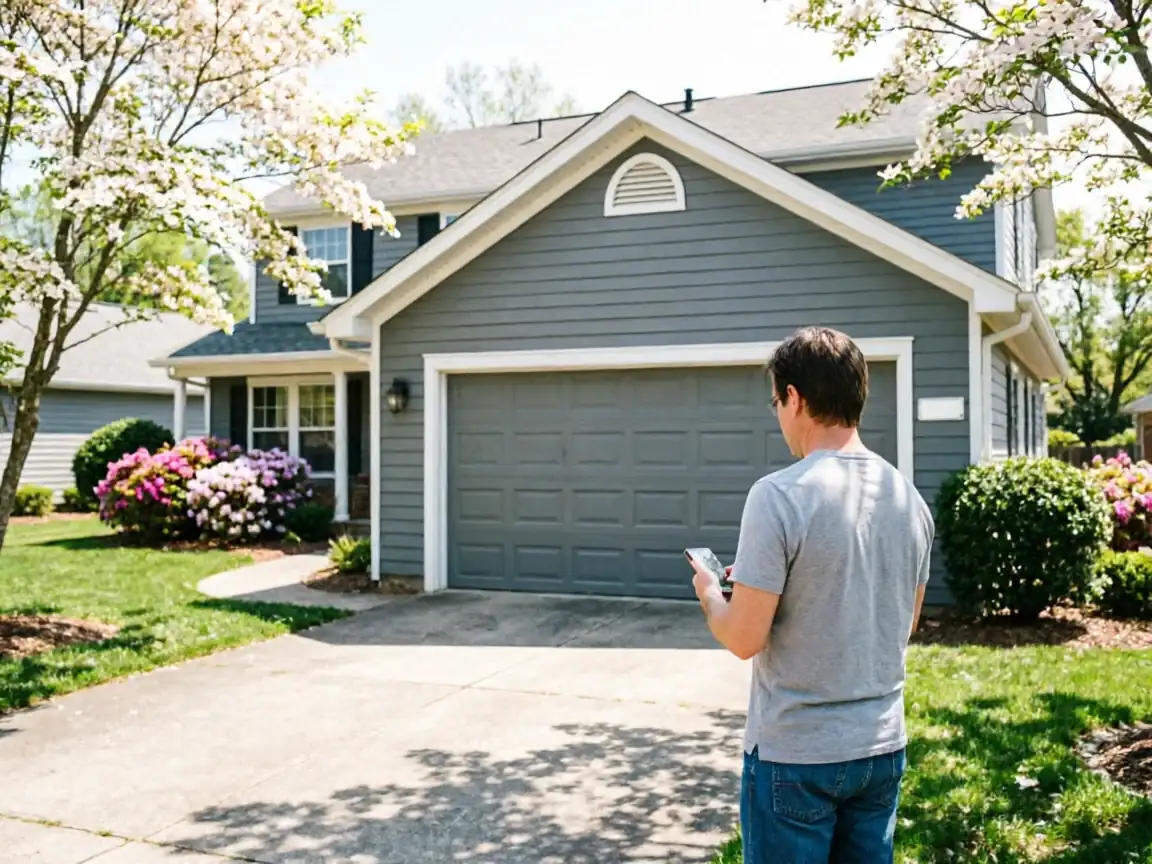
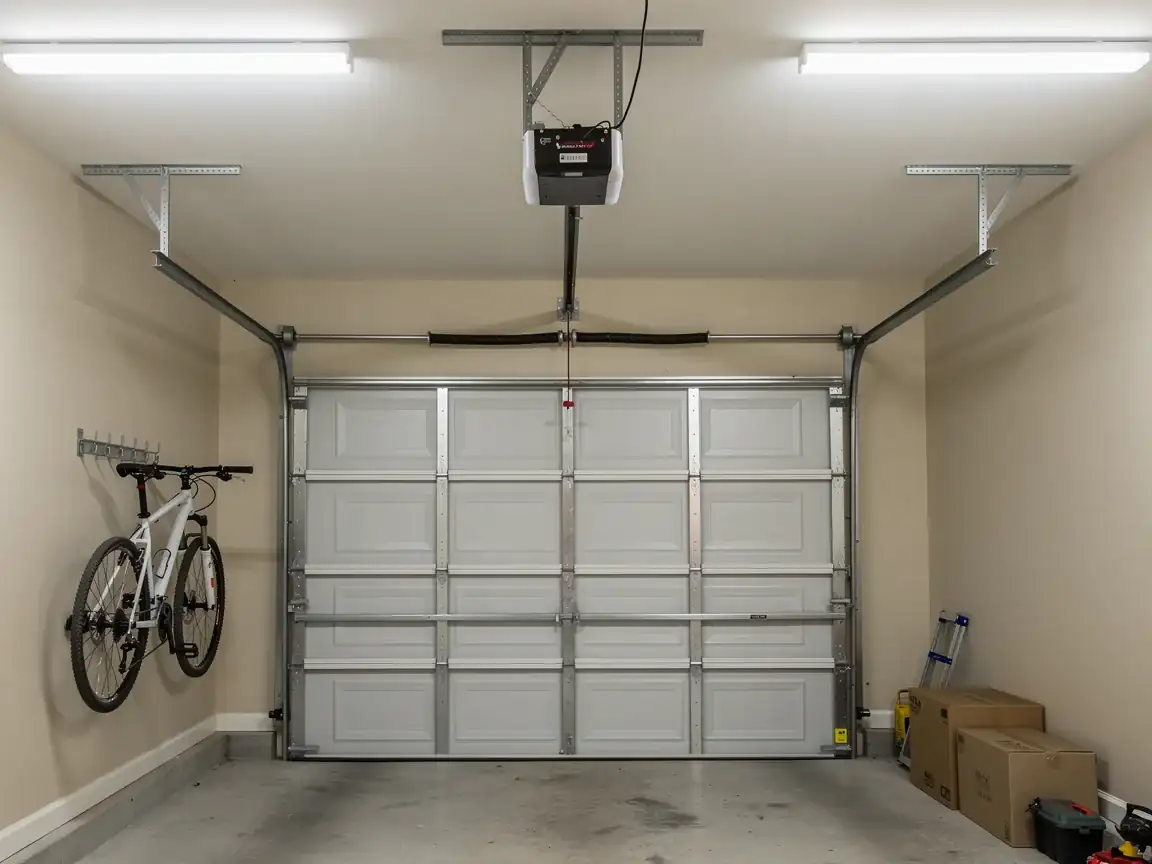
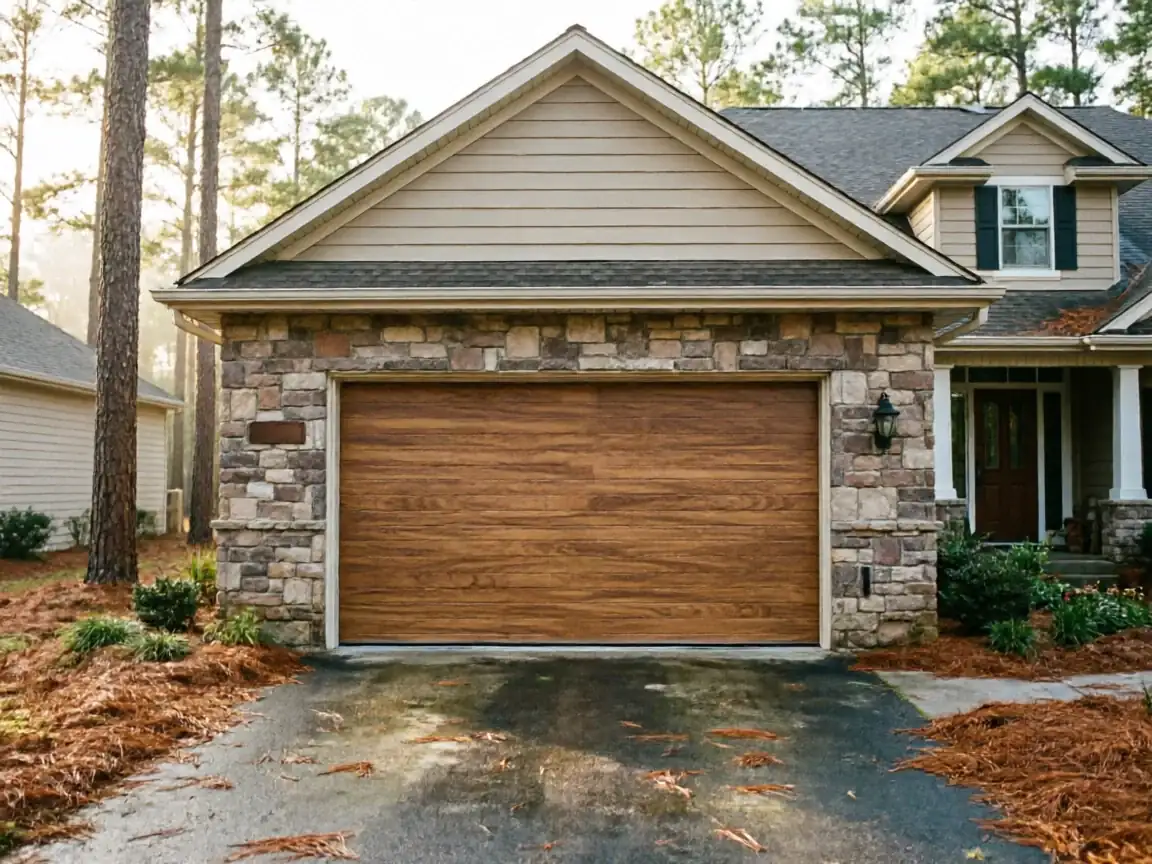
Most houses in Henderson went up around 1979, a few years newer than the typical build across the wider Jackson service area (median 1975, F1). That matters for cable repair because a door from that stretch is almost always a steel sectional, either 16x7 for a two-car opening or 9x7 for a single, hung on extension springs with a cable running to a pulley at each bottom bracket, or less often a torsion setup with cable drums at the header. The fault we see on these is a frayed or snapped lift cable, usually at the bottom bracket where the cable takes the most flex. We don't post a flat number for the job here because the price swings on whether it's one cable or two, extension or torsion hardware, and whether the drum or pulley got chewed up when the cable let go. A straight one-cable swap on an extension-spring door is the cheapest version of this repair; a torsion door where the drum grooves are damaged costs more because that part isn't something we carry pre-cut for every drum size. What we can tell you up front: a door this age has had 40-plus years of use, so when one cable goes, the other side is usually close behind, and we'll say so rather than send the truck back a second time. We travel the 18 miles from Jackson to reach Henderson, and that's reflected in the overall visit, not in the cable itself.
Can You Do This Yourself
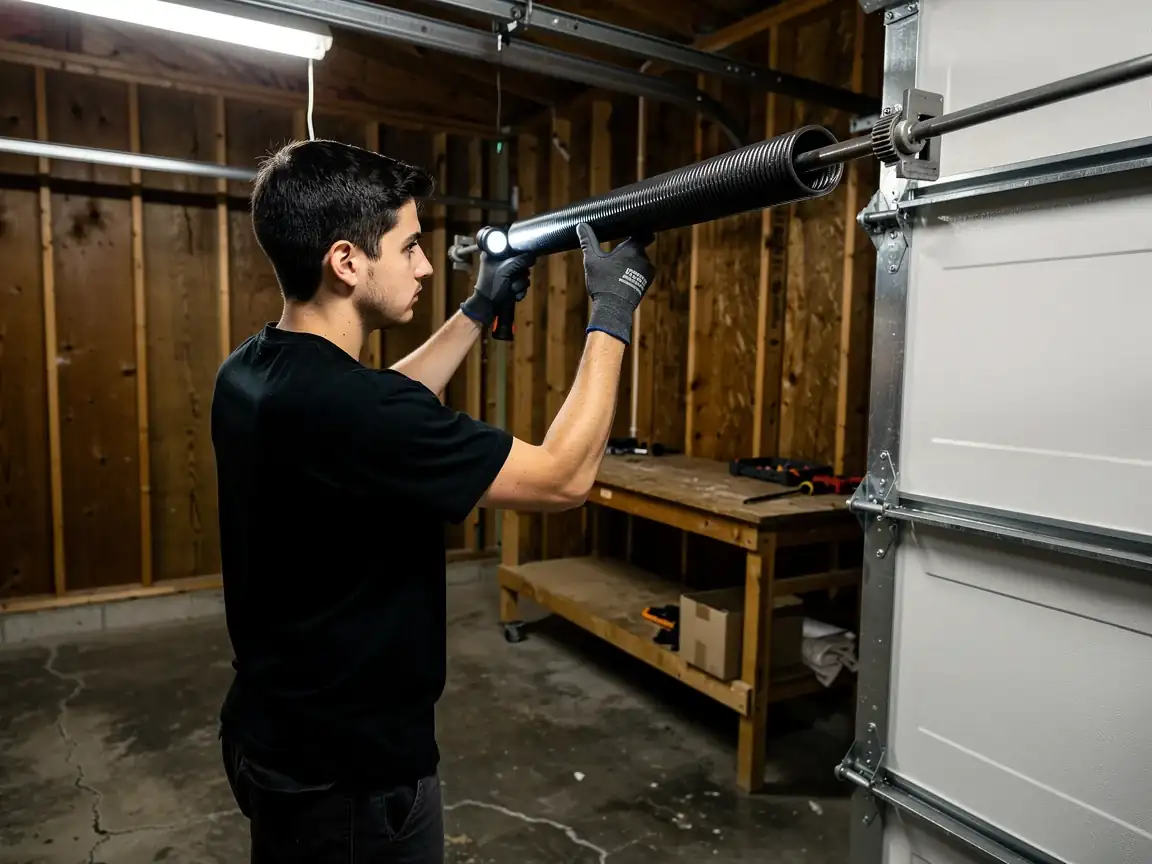
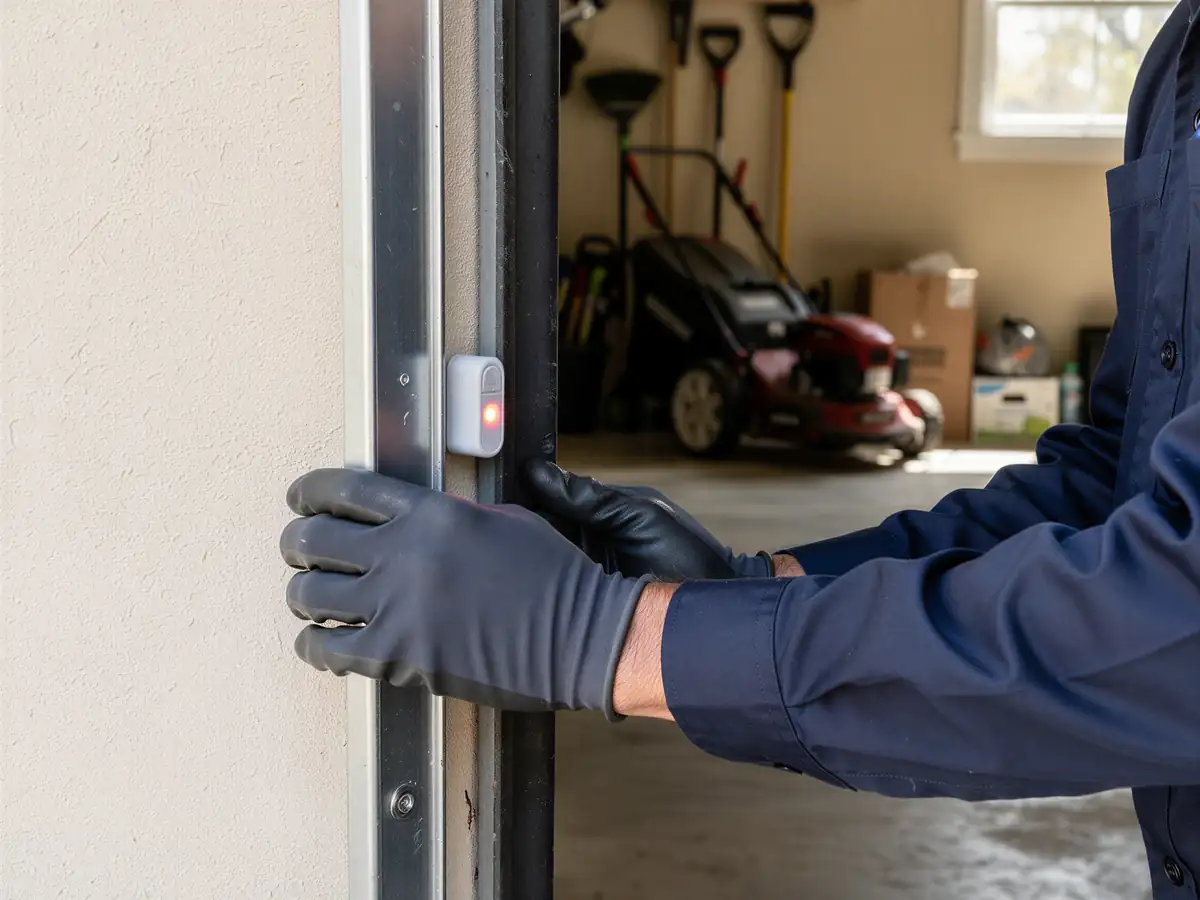
A lift cable under tension is not a weekend project, and we'd be lying if we said otherwise. On an extension-spring door the spring itself is stretched and can let go with real force; on a torsion door the drum is holding the entire weight of a steel panel section through that one cable. We've seen people try to re-thread a cable without winding down the spring tension first, and it does not end well for hands or faces. If the cable has simply come off a pulley and the door is still sitting level, you can sometimes ease it back by hand with the opener disconnected and the door blocked - that's about the limit of what's reasonable to do solo. Anything involving removing or replacing the cable itself means releasing stored spring tension, and that's the part that sends people to urgent care. If you're not sure which kind of spring system your door has, that uncertainty alone is a reason to call rather than guess, especially on an older torsion setup where the winding cone may be worn from four decades of use.
What the Repair Takes
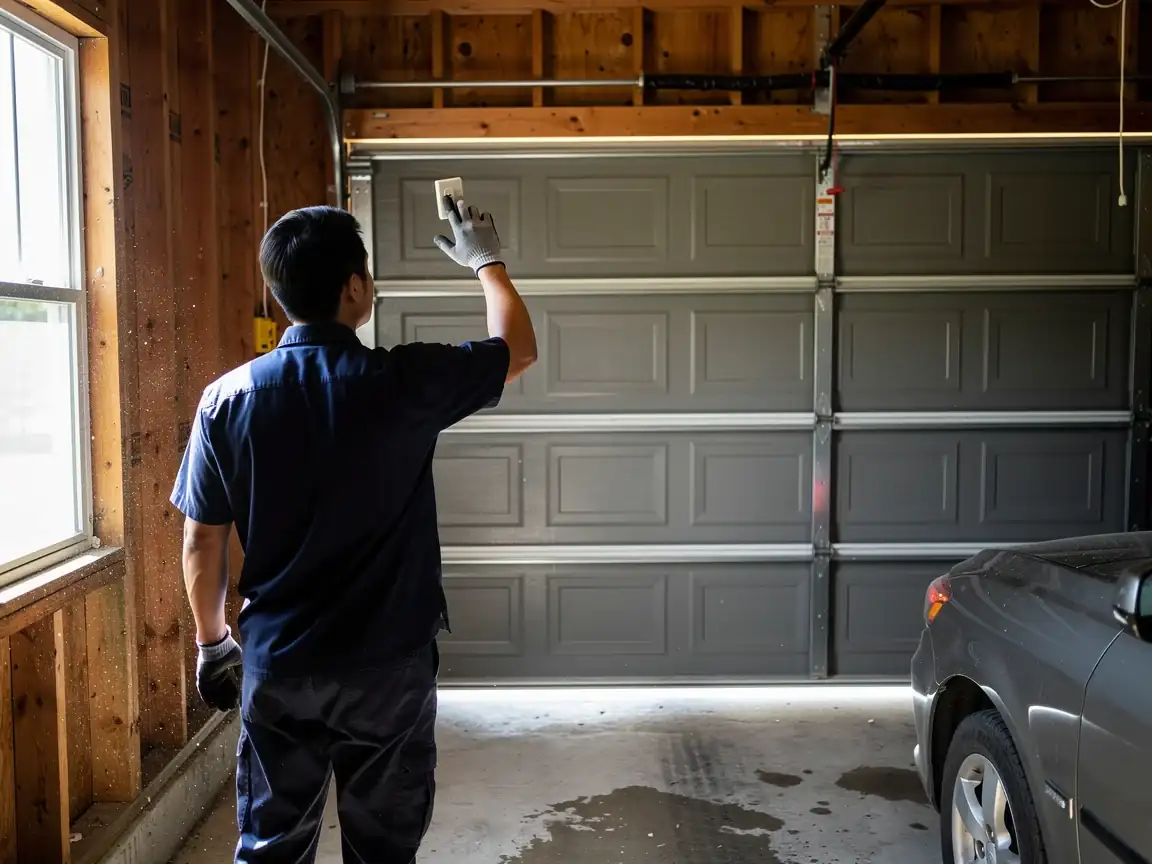
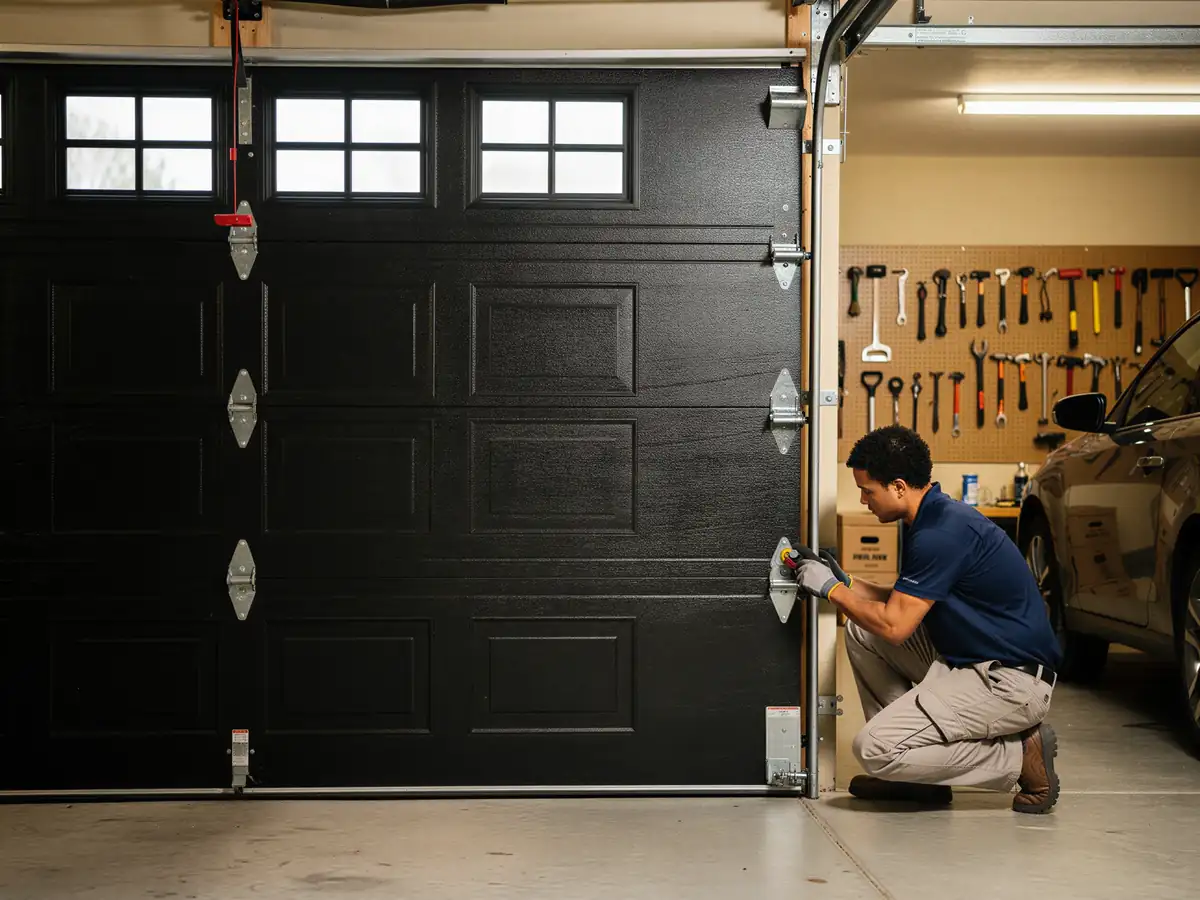
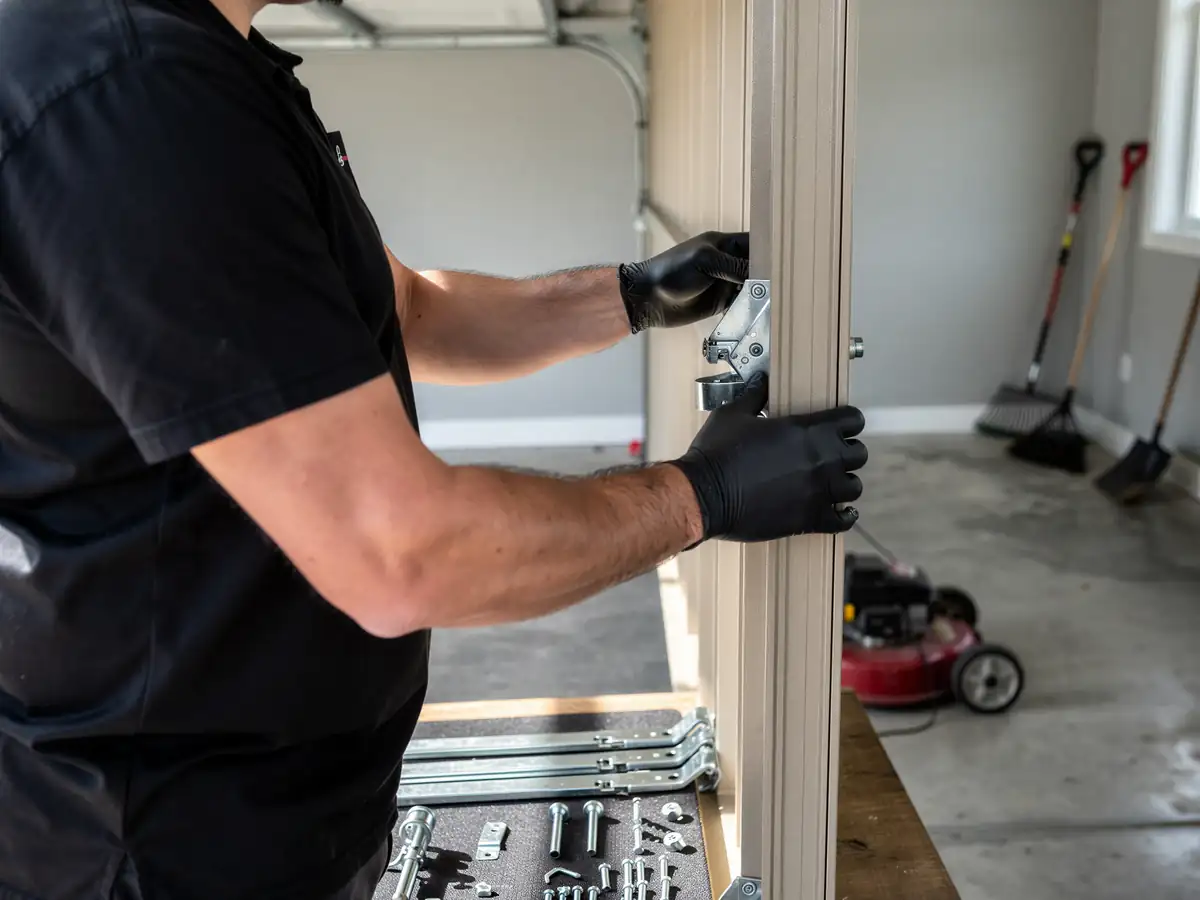
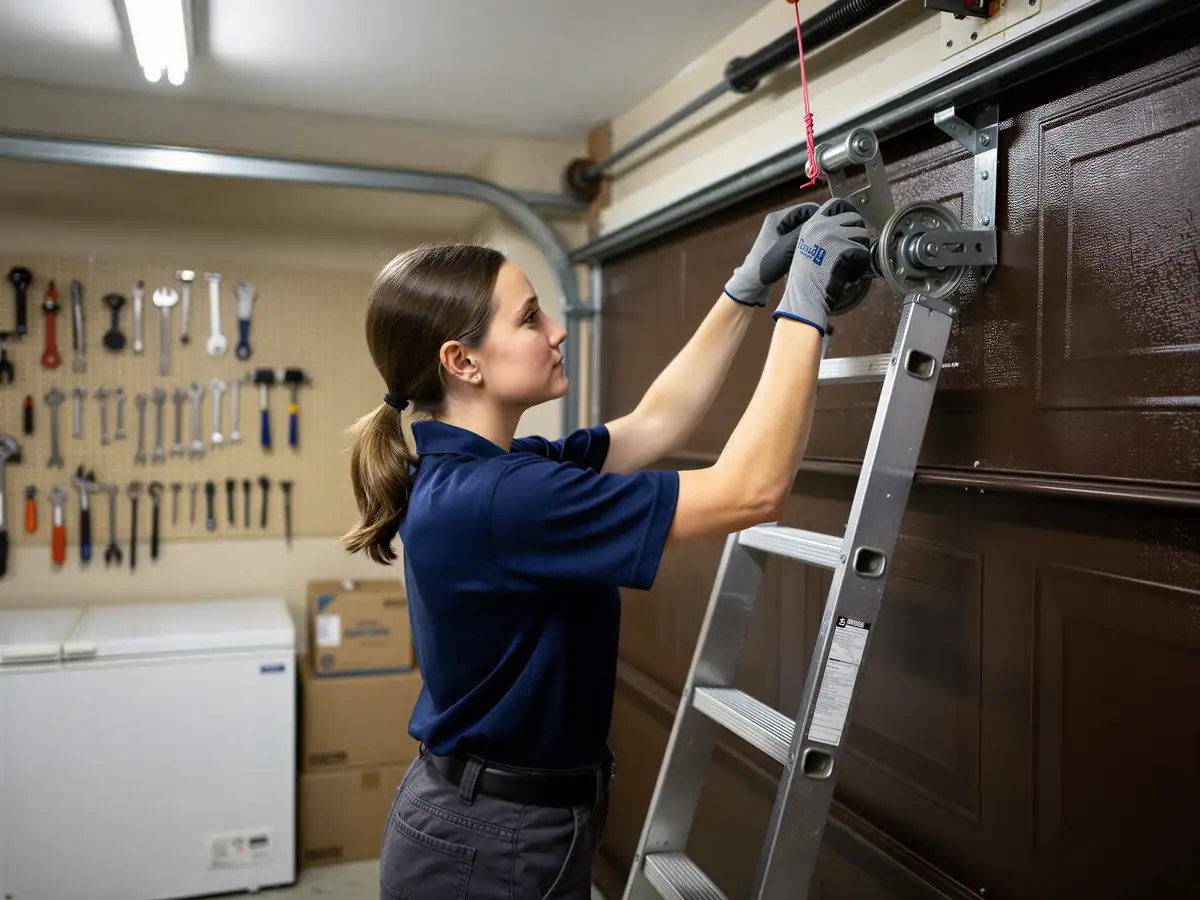
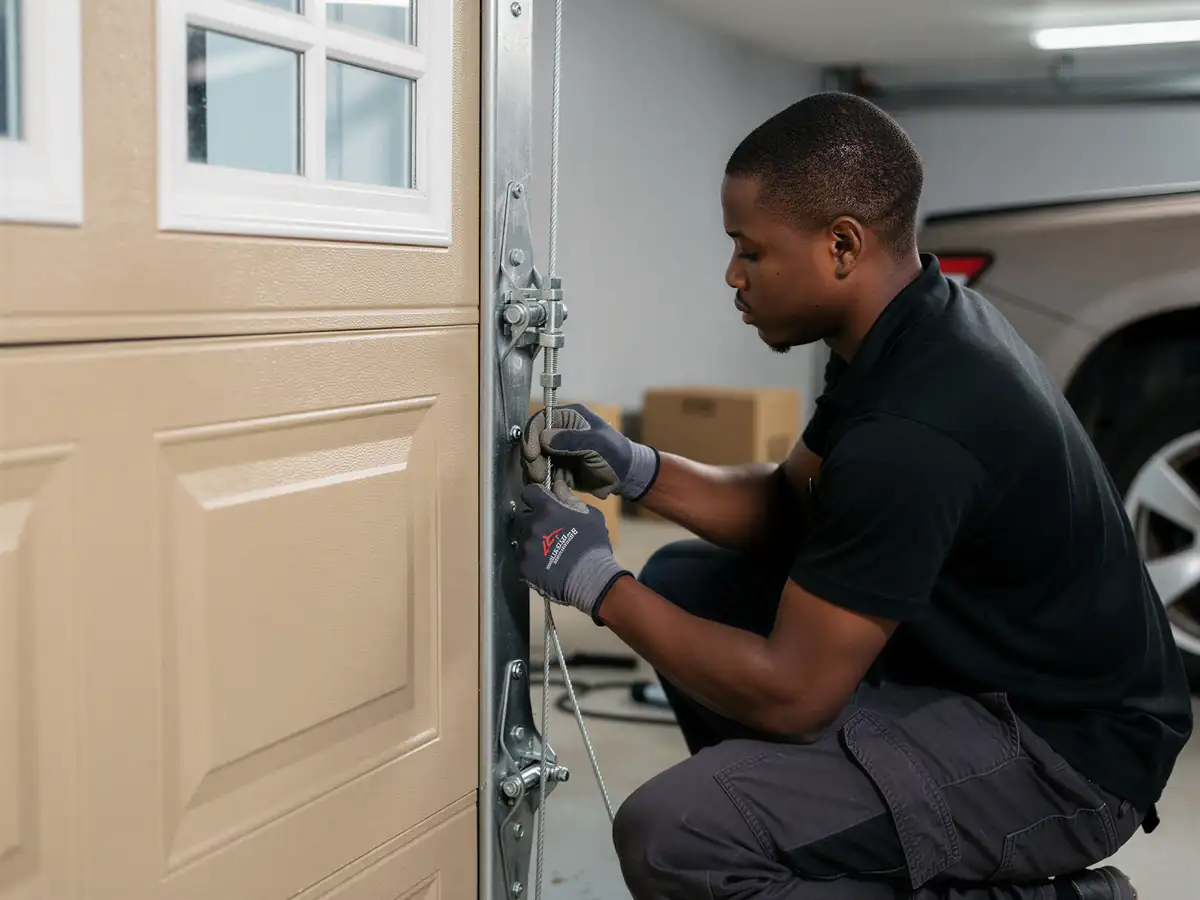
A straightforward cable replacement on an extension-spring door - the more common setup on Henderson's late-1970s stock - usually means releasing the spring tension, pulling the old cable off the bottom bracket and pulley, running the new one, and resetting tension so both sides lift evenly. If it's torsion hardware, we're also checking the drum for groove wear before we trust a new cable to it. Either way, the real work is matching the tension and travel to the door's actual weight, not just swapping the part. For a household income typical of the area (median $57,727), a cable job tends to be one of the more affordable garage door repairs rather than a full spring or opener replacement, which is part of why it's worth catching early - a door limping on one good cable puts extra strain on the opener and the remaining hardware. We'll tell you plainly if what looks like a cable problem is actually a dying spring wearing the cable prematurely, because replacing the cable alone in that case just means a second call.