How Long It Takes
Bells sits about 15 miles from our shop in Jackson, which is the first thing that shapes how a panel job here actually runs. We don't keep a branch in town, so every visit starts with that drive - roughly 25 to 30 minutes depending on the route, built into the appointment window we give you rather than tacked on after. That matters more for panel work than for some other jobs: if a section needs to be special-ordered, we want to know that on the first visit, not discover it after a second trip out.
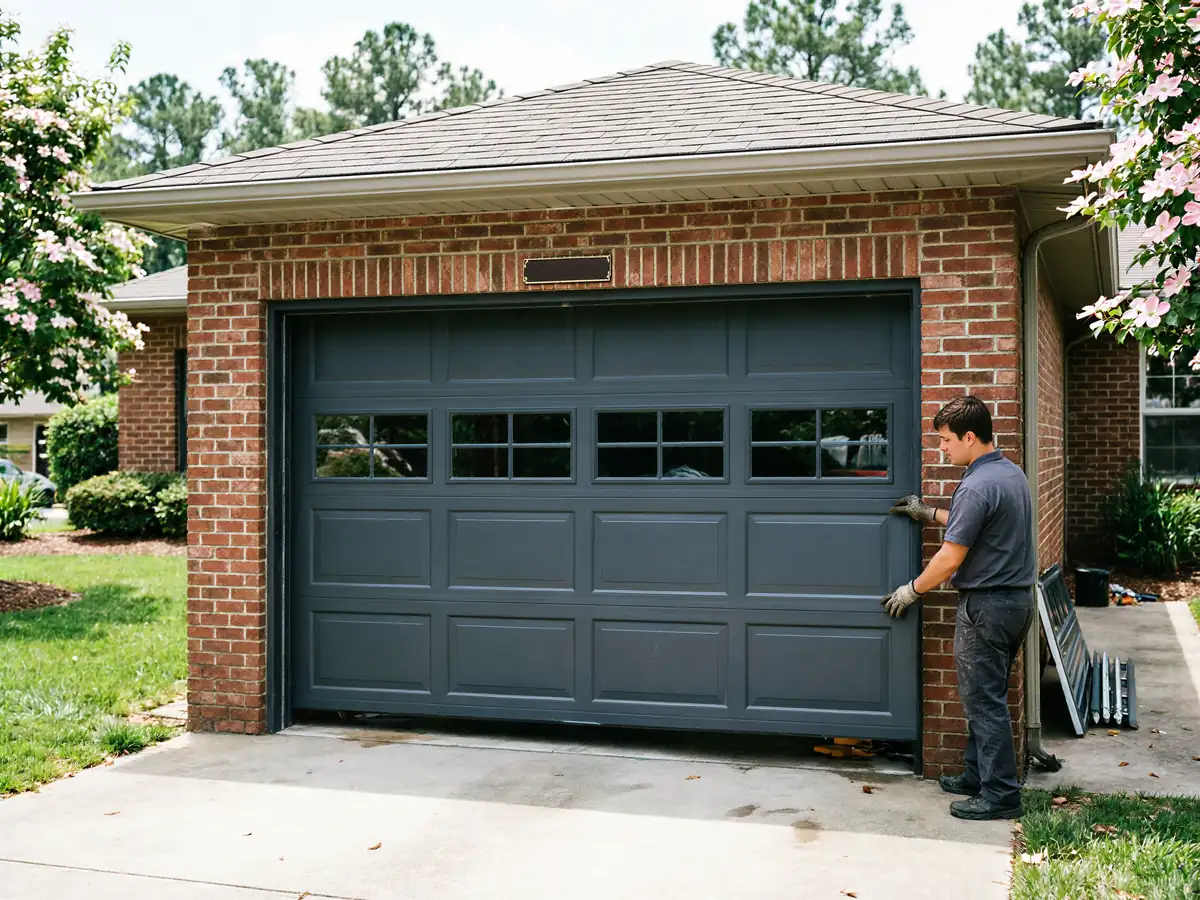
Most houses in Bells went up around 1993, which puts the neighborhood squarely in the steel-sectional era rather than the older wood-panel stock you'll find in some of the service area's 1960s and 70s pockets. That's good news for timing. Doors from this period use standardized panel heights and common bolt patterns, so a single damaged section is usually a same-visit swap rather than a hunt for obsolete parts. Full multi-panel jobs, or anything needing a color match on a faded door, take longer and sometimes mean a return trip once the panel arrives.
The Complications
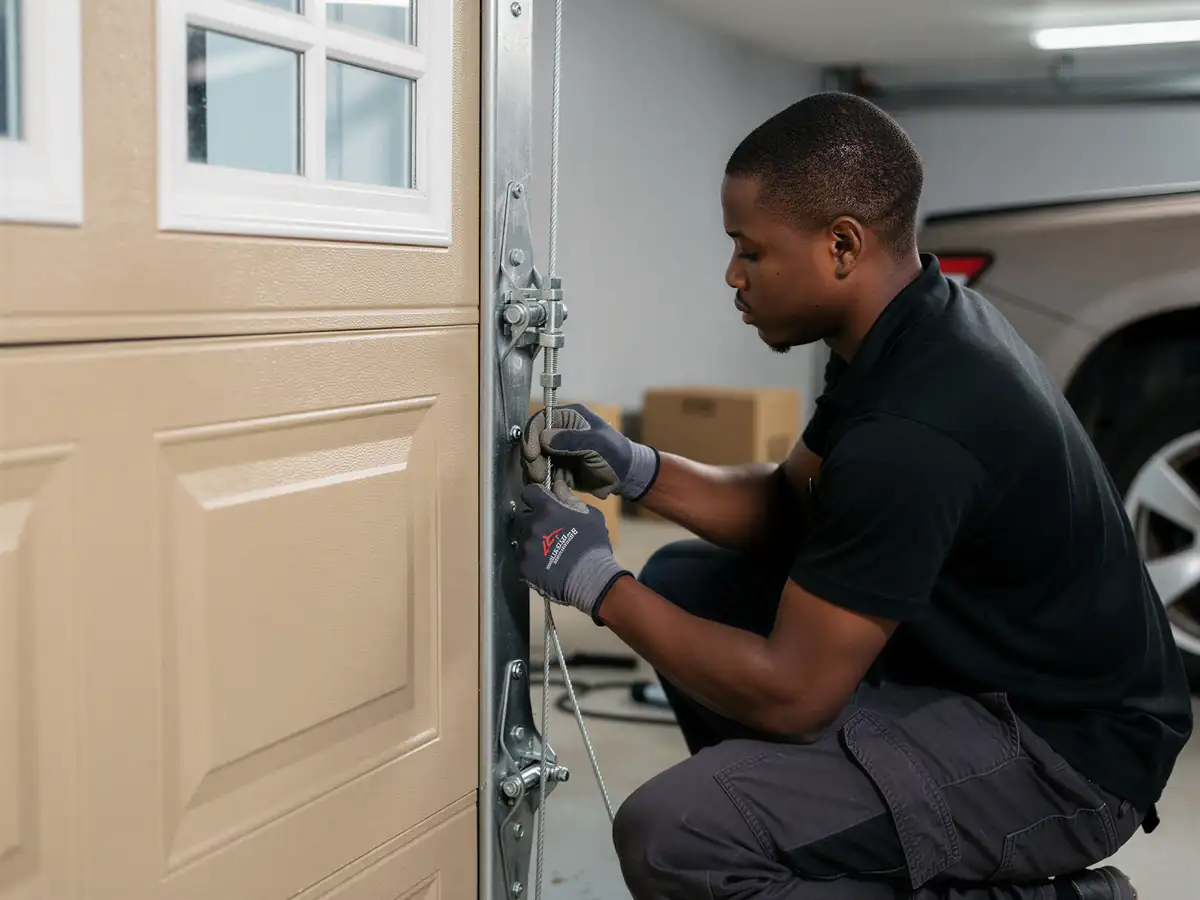
A door built in 1993 has had three decades to collect small problems that complicate a clean panel swap. Tracks settle, hinges wear oval instead of round, and the paint on one section fades differently than the rest once it sits in direct sun for twenty-plus years. Swapping a single panel on an otherwise sound door is straightforward. Swapping one panel on a door where the finish has weathered unevenly means the new section will look new next to sections that aren't - that's a cosmetic reality we tell people up front, not something we can fix with the panel itself.
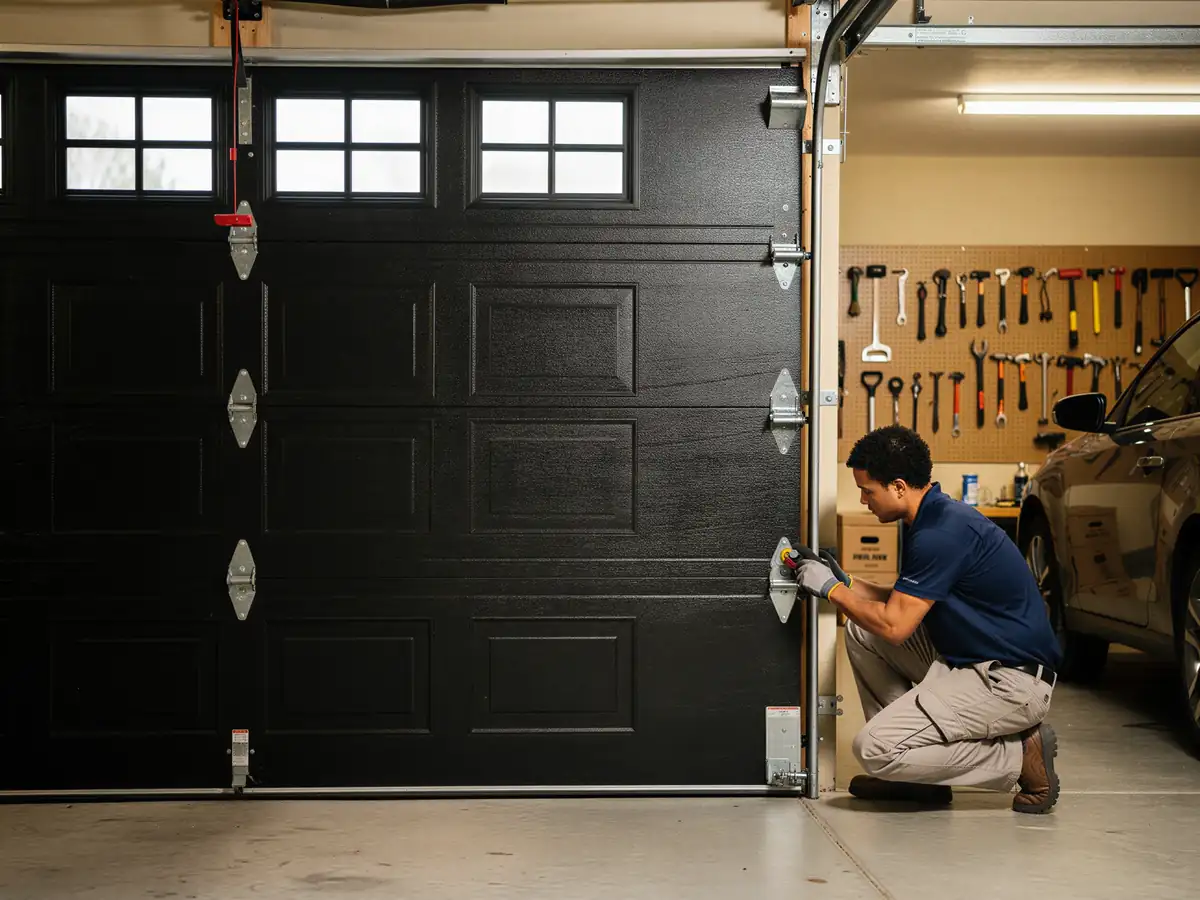
The other complication is less obvious: the cold-weather swings this part of Tennessee gets. Steel panels contract in cold and expand in heat, and a door that's been through thirty winters can have hairline gaps at the seams that don't show until you pull a damaged section and see what's underneath - rust creeping in at a seam, insulation that's shifted, a hinge screw that's stripped the hole. None of that stops the job. It just means we sometimes find a second small repair once the broken panel is off, and we'll tell you before we do anything about it.
Parts We Carry
We stock panel sections sized for the common door widths and heights found on 1990s-era construction
Which covers the great majority of what we see driving into Bells. Standard steel sections, the usual hinge and roller hardware that pairs with them, and the fasteners that typically fail before the panel itself does - that's truck stock, no wait.
What we don't carry on the truck
Color-matched panels for doors that have faded unevenly, discontinued profiles from manufacturers that have since changed their panel lines, and insulated panels with non-standard core thickness. Those get ordered once we've measured the door in person, and lead time depends on the manufacturer, not on us. If your door is one of the newer builds in the area rather than the older stock, parts availability is usually better, not worse - newer lines are still in production.
One honest limitation
If more than two or three panels on a door are damaged, or the door is old enough that the manufacturer no longer makes a matching section, replacing the whole door is usually cheaper and faster than chasing parts for a partial match. We'll say so rather than quote you a patchwork repair that costs more than a new door.
How to Book
Tell us the door's approximate age and how many panels are affected when you call - for a door built around the early 1990s, that's usually enough for us to bring the right hardware on the first trip. We'll confirm the exact panel size when we're there, since even same-era doors vary by manufacturer.
We serve Bells from Jackson, which means we schedule the visit with the drive in mind rather than treating it as a walk-up call. That keeps the quote honest and the appointment window realistic instead of optimistic.